Monday, December 8, 2014

New Research Suggests Better Ways To Seek Out Pale Blue Dots

New Research Suggests Better Ways To Seek Out Pale Blue Dots:


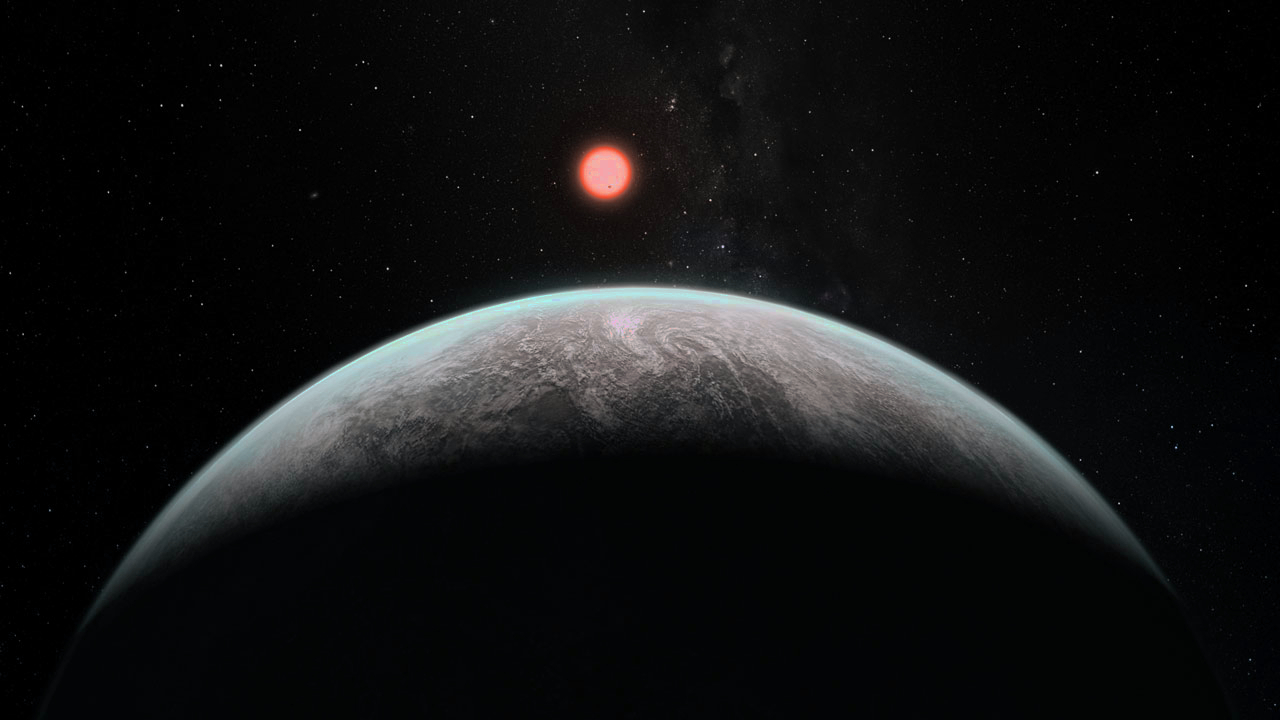
Artist’s impression of how an infant earth might look. Credit: ESO.


Artist’s impression of how an infant earth might look. Credit: ESO.
The search for worlds beyond our own is one of humankind’s greatest quests. Scientists have found thousands of exoplanets orbiting other stars in the Milky Way, but are still ironing out the details of what factors truly make a planet habitable. But thanks to researchers at Cornell University, their search may become a little easier. A team at the Institute for Pale Blue Dots has zeroed in on the range of habitable orbits for very young Earth-like planets, giving astronomers a better target to aim at when searching for rocky worlds that contain liquid water and could support the evolution of life.

The Habitable Zone (HZ) of a star is its so-called “Goldilocks region,” the not-too-hot, not-too-cold belt within which liquid water could exist on orbiting rocky planets. Isolating planets in the HZ is the primary objective for scientists hoping to find evidence of life. Until now, astronomers have mainly been searching for worlds that lie in the HZ of stars that are in the prime of their lives: those that are on the Main Sequence, the cosmic growth chart for stellar evolution. According to the group at Cornell, however, scientists should also be looking at cooler, younger stars that have not yet reached such maturity.


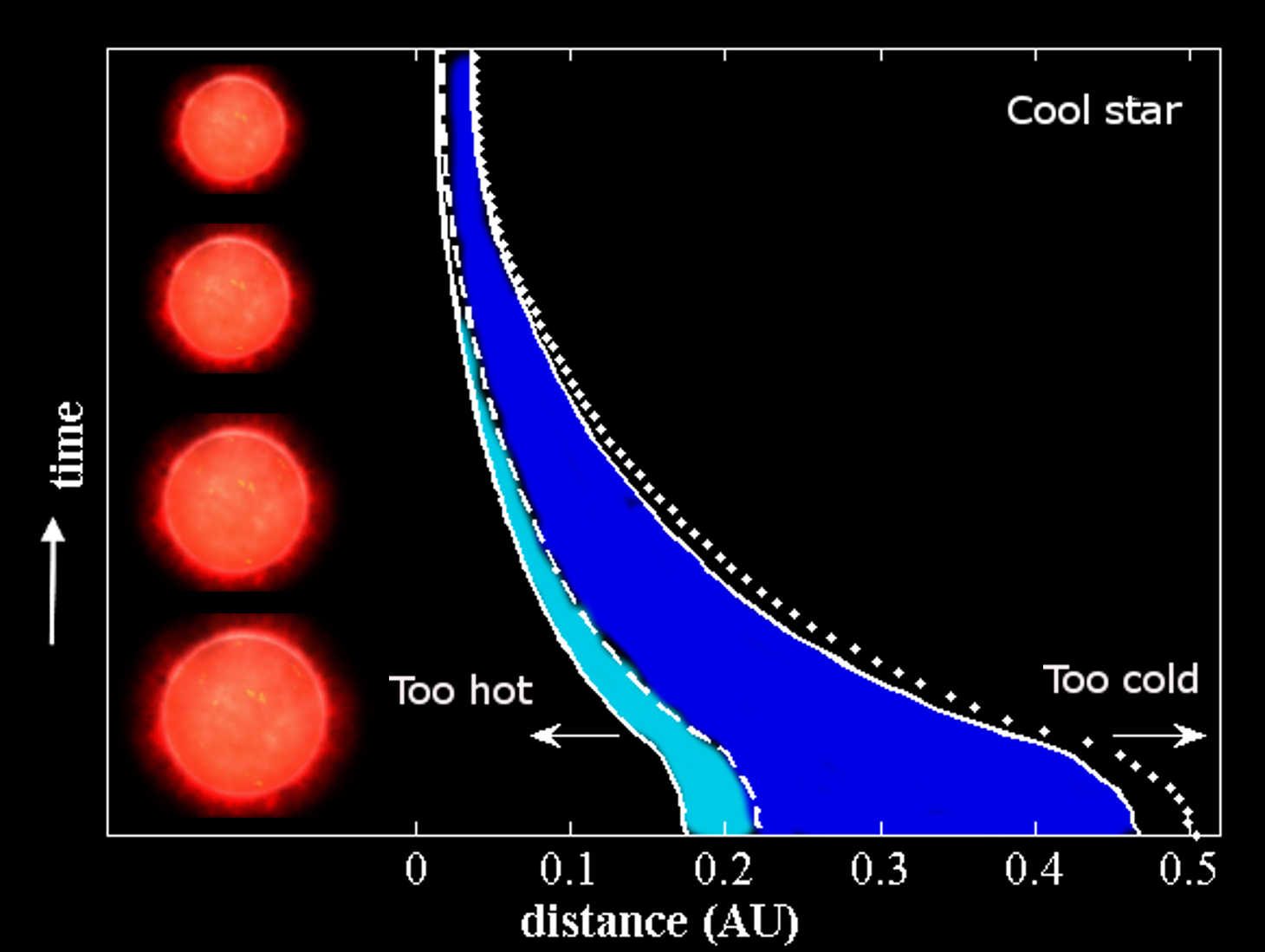
The increased distance of the Habitable Zone from pre-main sequence stars makes it easier to spot infant Earths. Credit: Astrophysical Journal Letters.


The increased distance of the Habitable Zone from pre-main sequence stars makes it easier to spot infant Earths. Credit: Astrophysical Journal Letters.
As shown in the figure above, cool stars in classes F, G, K, and M are more luminous in their pre-Main Sequence stage than they are once they mature. Planets that circle around such bright stars tend to have more distant orbits than those that accompany dimmer stars, making transits more visible and providing a larger HZ for astronomers to probe. In addition, the researchers found that fledgling planets can spend up to 2.5 billion years in the HZ of a young M-class star, a period of time that would allow ample time for life to flourish.

But just because liquid water could exist on a planet doesn’t mean that it does. A rocky planet must first acquire water, and then retain it long enough for life to develop. The Cornell group found that a watery world could lose its aqueous environment to a runaway greenhouse effect if if forms too close to a cool parent star, even if the planet was on course to eventually stray into the star’s HZ. These seemingly habitable planets would have to receive a second supply of water later on in order to truly support life. “Our own planet gained additional water after this early runaway phase from a late, heavy bombardment of water-rich asteroids,” offered Ramses Ramirez, one author of the study. “Planets at a distance corresponding to modern Earth or Venus orbiting these cool stars could be similarly replenished later on.”

Estimations for the HZs of cool, young stars and probable amounts of water loss for exoplanets orbiting at various distances are provided in a preprint of the paper, available here. The research will be published in the January 1, 2015 issue of The Astrophysical Journal.


About 

Vanessa earned her bachelor's degree in Astronomy and Physics in 2009 from Wheaton College in Massachusetts. Her credits in astronomy include observing and analyzing eclipsing binary star systems and taking a walk on the theory side as a NSF REU intern, investigating the impact of type 1a supernovae on the expansion of the Universe. In her spare time she enjoys writing about astrophysics and cosmology, making delicious vegetarian meals, taking adventures with her husband and/or Nikon D50, and saving the world.

Wednesday, December 3, 2014

Communicating Across the Cosmos, Part 3: Bridging the Vast Gulf

Communicating Across the Cosmos, Part 3: Bridging the Vast Gulf:


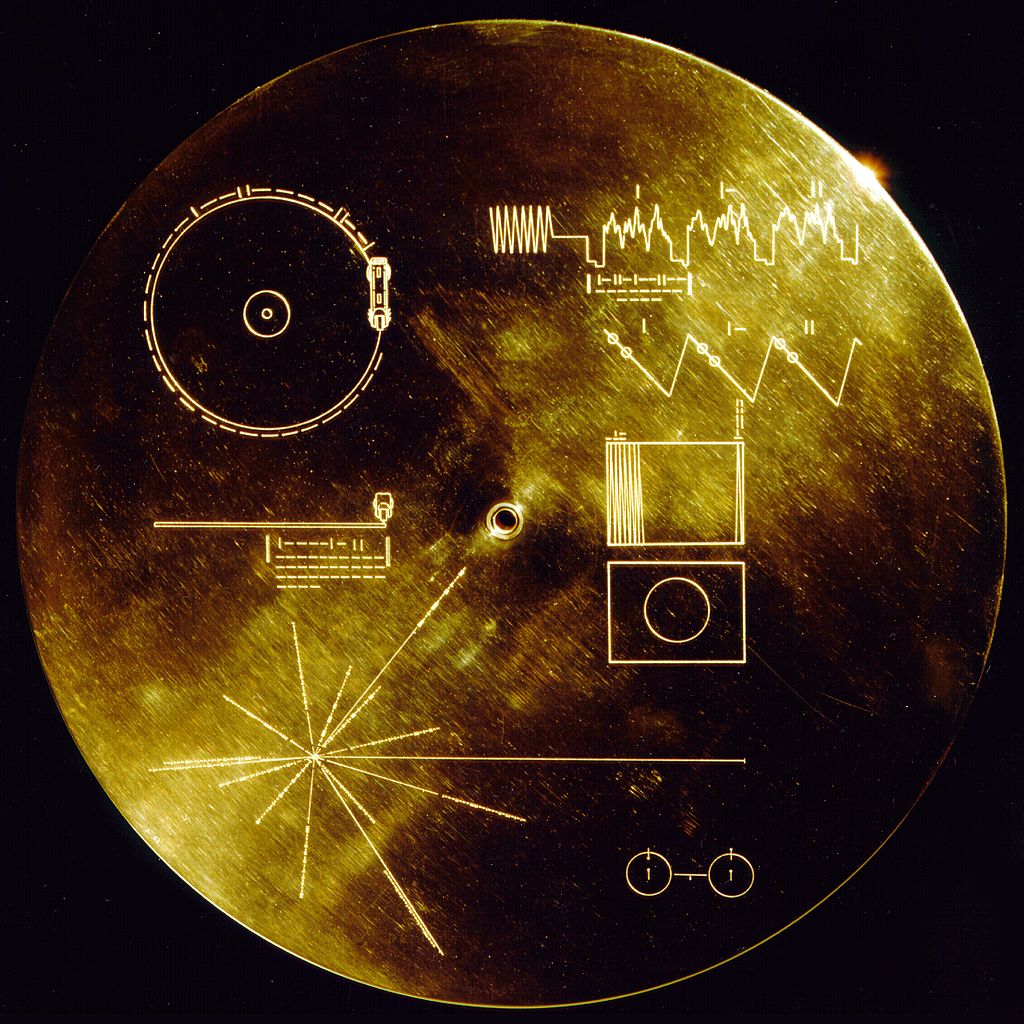
The cover of the phonograph record on the Voyager 1 and 2 spacecraft, which contains an interstellar message encoded on a phonographic record. The encoded instructions attempt to explain to extraterrestrials how to play the record. Credit: NASA JPL


The cover of the phonograph record on the Voyager 1 and 2 spacecraft, which contains an interstellar message encoded on a phonographic record. The encoded instructions attempt to explain to extraterrestrials how to play the record, and the location of the Earth. Credit: NASA JPL
If extraterrestrial civilizations exist, the nearest is probably at least hundreds or thousands of light years away. Still, the greatest gulf that we will have to bridge to communicate with extraterrestrials is not such distances, but the gulf between human and alien minds.

In mid-November, the SETI Institute in Mountain View, California sponsored an academic conference on interstellar communication, “Communicating across the Cosmos“. The conference drew 17 speakers from a variety of disciplines, including linguistics, anthropology, archeology, mathematics, cognitive science, radio astronomy, and art. In this installment we will explore some of the formidable difficulties that humans and extraterrestrials might face in constructing mutually comprehensible interstellar messages.


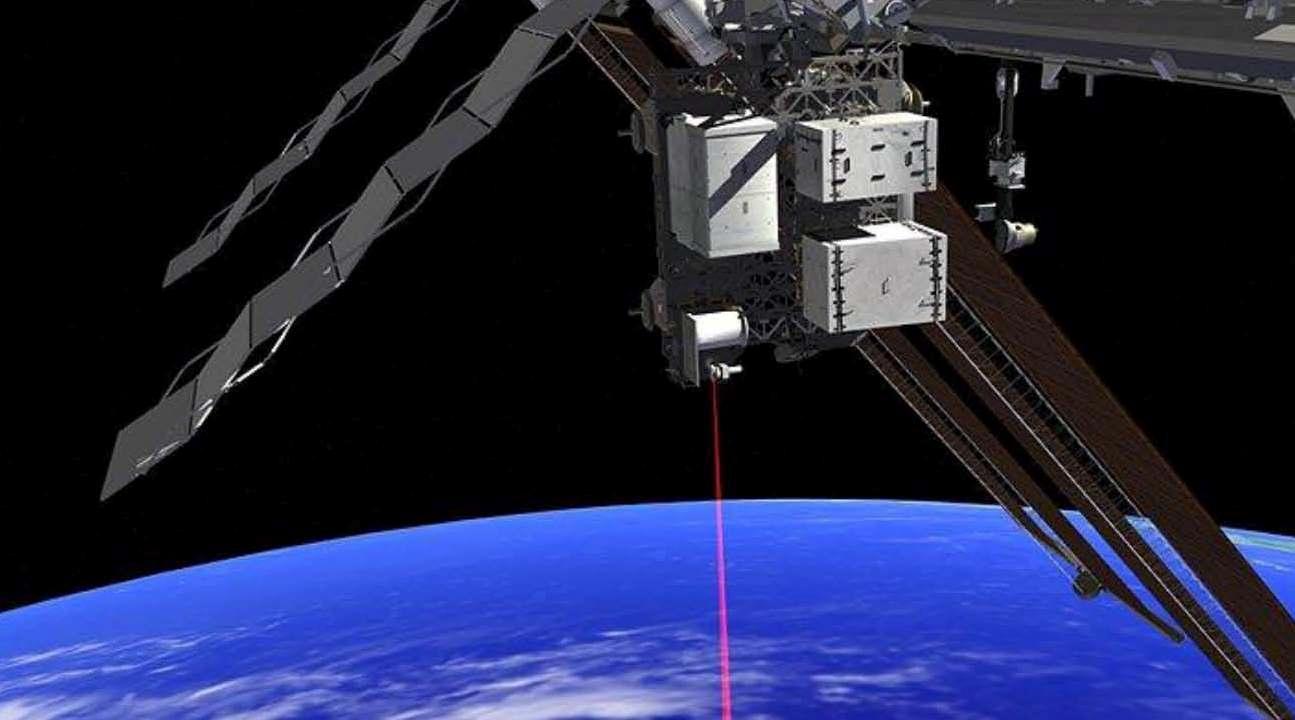
Optical PAyload for Lasercomm Science (OPALS) Flight System, the first laser communication from space. Credit: NASA/JPL-Caltech.


Optical PAyload for Lasercomm Science (OPALS) Flight System, the first laser communication from space. Credit: NASA/JPL-Caltech.
If we knew where they were, and we wanted to, the information revolution has given us the capability to send an extraterrestrial civilization a truly vast amount of information. According to SETI Institute radio astronomer Seth Shostak, with broadband microwave radio we could transmit the Library of Congress, or the contents of the World Wide Web in 3 days; with broadband optical (a laser beam for space transmission) we could transmit this same amount of information in 20 minutes. This transmission would, of course, take decades or centuries to cross the light years and reach its destination. These truly remarkable capabilities give us the ability to send almost any message we want to the extraterrestrials. But transmitting capabilities aren’t the hard part of the problem. If the aliens can’t interpret it, the entire content of the World Wide Web is just a mountain of gibberish.

Many conference participants felt that the problems involved in devising a message that could be understood by a non-human mind were extremely formidable, and quite possibly insurmountable.

Having its own separate origin, extraterrestrial life could be different from Earthly life all the way down to its biochemical foundations. The vast diversity of life on Earth gives us little reason to think that aliens will look like us. Given the different conditions of another planet, and the contingencies of a different history, evolution will have produced a different set of results. For interstellar messaging to be possible at all, these results must include an alien creature capable of language, culture, and tool-making. But if these abilities are founded on a different biology and different perceptual systems, they might differ from their human counterparts in ways that we would find hard to even imagine. Looking to our own possible future development, we can’t even be sure that extraterrestrials will be biological creatures. They might be intelligent machines.

According to cognitive scientist Dominique Lestel, who presented at the conference, understanding extraterrestrials poses an unprecedented set of problems. We face all of the problems that ethologists (scientists who study animal behavior) face when they study perception and signaling in other animal species. These are compounded with all of the problems that ethnologists face when they study other human cultures. Lestel worries that humans might not be smart enough to do it. He wasn’t alone in that opinion.


Explanation of the symbols on the cover of the Voyager record Credit: NASA JPL


Explanation of the symbols on the cover of the Voyager record. Credit: NASA JPL
Linguist and conference presenter Sheri-Wells Jensen said that humans have created more than 7,000 different spoken and signed languages. No one knows whether all human languages sprung from a single instance of the invention of language or whether several human groups invented language independently. Given the ease with which children learn a language, many linguists think that our brain has a specialized language “module” underlying the “universal” grammar of human languages. These special features of the human brain might pose a formidable barrier to learning the language of a creature with a different brain produced by a different evolutionary history. An alien language might make demands on our short term memory or other cognitive abilities that humans would find impossible to meet.

When human beings talk to one another, they rely on a system of mutually understood conventions. Often gestures and body language are essential to conveying meaning. Conference presenter Klara Anna Capova, a cultural anthropologist, noted that interstellar messaging poses unique problems because the conventions to be followed in the message can’t be mutually arranged. We must formulate them ourselves, without knowing anything about the recipients. The intended recipients are distant in both time and space. The finite speed of light ensures that query and response will be separated by decades or centuries. With so little to go on, the message will inevitably reflect our cultural biases and motives. In 1962, the Soviet Union transmitted a message towards the planet Venus. It was in Morse code, and consisted of the Cyrillic characters “Lenin”, “CCCP” (USSR), and “MIR” (the Russian word for “peace”). But the posited Venusians couldn’t possibly have known the conventions of Morse code, the Cyrillic alphabet, human names, countries, or possible relationships between them, no matter how intimately familiar these things would have seemed to the Soviets. Whether they are meant to build national prestige, sell a product, or cause humans to think deeply about their place in the universe, interstellar messages play to a human audience.

Given the long timescales involved in interstellar messaging, many conference participants noted the parallels with archeology. Archeologists have learned quite a lot about past human cultures by studying the artifacts and symbols they have left for us. Still, archeological methodologies have their limits. According to conference presenter and archeologist Paul Wason, these limits have much to teach us about interstellar messaging. Certain meanings are accessible to archeological analysis and others aren’t, because we lack the contextual knowledge needed to interpret them. Neolithic cave paintings speak to modern investigators about the skill and abilities of the painters. But, because we don’t have the needed contextual knowledge, they don’t tell us what the paintings meant to their creators.

To interpret symbols used in the past, we need to know the conventions that related the symbols to the things they symbolized. Linguistic symbols pose special problems. To understand them, we need to know two different sets of conventions. First, we need to know the conventions that relate the script to the words of the spoken language. Second, we need to know how the words of the spoken language relate to the things and situations it refers to. It is a sobering thought for would-be exolinguists that no one has ever succeeded in deciphering an ancient script without knowing the language it was written in.

What does all this tell us about our fledgling attempts to devise messages for aliens? The phonograph record carried on the Voyager 1 and 2 spacecraft includes a moving message from then President Carter, encoded as English text. It reads in part: “We hope someday, having solved the problems we face, to join a community of galactic civilizations. This record represents our hope and our determination, and our good will in a vast and awesome universe.”

Human archeologists have never deciphered linear A, the writing system of the ancient Minoan civilization, due to its apparent lack of association with any known language. Unfortunately, since extraterrestrials likewise lack contextual knowledge of any human language, it is almost certain that they could never discern the meaning of President Carter’s text. The team that developed the Voyager message, which included astronomers and SETI pioneers Carl Sagan and Frank Drake, were well aware of the problem. Carter was, most likely, made aware. Interstellar messages play to a human audience.


An inscription written around the inner surface of a cup in Linear A, a script used by the Minoan civilization that has never been deciphered. Credit: Sir Arthur Evans, Scripta Minoa: The Written Documents of Minoan Crete


An inscription written around the inner surface of a cup in Linear A, a script used by the Minoan civilization that has never been deciphered. Credit: Sir Arthur Evans, Scripta Minoa: The Written Documents of Minoan Crete
Is it possible for us to do better? Some off-beat ideas were proposed. Both astronomer Seth Shostak and designer Marek Kultys thought we might consider sending the sequence of the human genome. This idea was quickly shot down by a comment from the audience. Why send them a key, they said, if the aliens don’t have a lock. The metaphor is apt. DNA can only do its job as a constituent part of a living cell. Reading and implementing the genetic code involves numerous highly specialized enzymes and other cellular parts. Even if alien biochemistry and cell structure are generally similar to their Earthly counterparts, there are many features of Earthly biochemistry that appear to be quirky products of the history of life on Earth. The probability that they would repeat themselves precisely on another world are, for all practical purposes, nil. Without the context of an Earthly cell, the sequence of the human genome would be meaningless gibberish.

In the twenty first century, our ability to transmit and process information has become astounding, but we still don’t know how information conveys meaning. Is there even a glimmering of a hope that we can reach beyond the limitations of our humanity to convey meaning to an alien mind? In the final installment of this report, we’ll consider some possibilities.

Previous articles in this series:
Part 1: Shouting into the Darkness
Part 2: Petabytes from the Stars

References and further reading:

Communicating across the Cosmos, How can we make ourselves understood by other civilizations in the galaxy?, SETI Institute

E. Howell (2014) How Do Aliens Think? We Need to Learn About Their Biology First, Analyst Argues. Universe Today.

J. Minor (2014) Will We Find Alien Life in 20 Years? You can bet on it. Universe Today.

C. Sagan, F. D. Drake, A. Druyan, T. Ferris, J. Lomberg, L. S. Sagan, (1978) Murmurs of Earth: The Voyager Interstellar Record. Random House, New York.


About 

Paul Patton is a freelance science writer. He holds a Bachelor's degree in physics from the University of Wisconsin Green Bay, a Master's degree in the history and philosophy of science from Indiana University, and a Doctorate in neuroscience from the University of Chicago. He has been interested in space, astronomy, and extraterrestrial life since early childhood.
New Analysis Sets a Space & Time Zone for Complex Life

New Analysis Sets a Space & Time Zone for Complex Life:


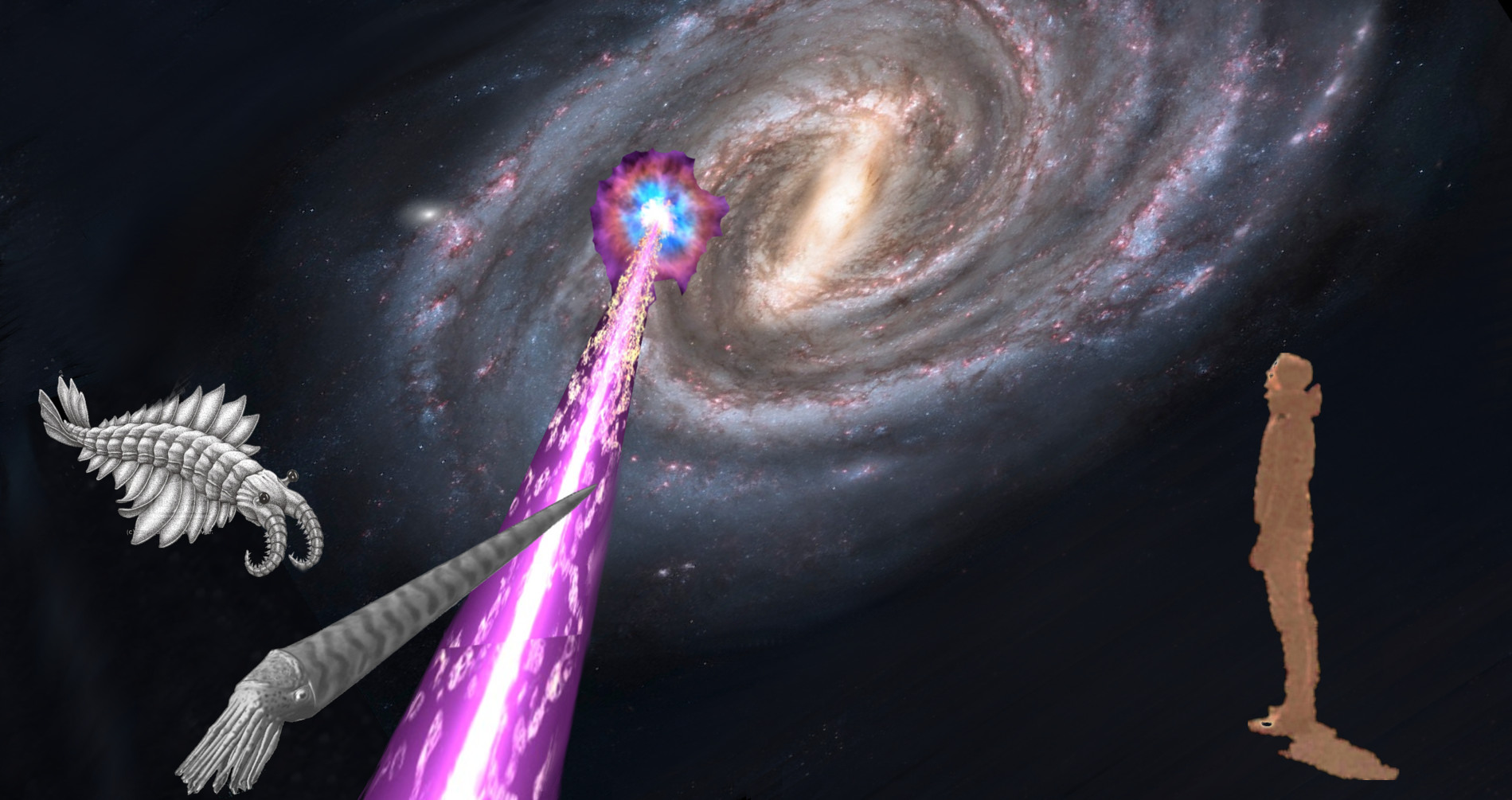
A new research paper reveals more details of the effect gamma ray bursts (GRB) have had on the development of complex life throughout the cosmos. Illustration depicts a beam from a GRB as might have been directed toward early life on Earth during the Cambrian or Ordovician periods, ~500 million years ago. (Illustration Credit: T. Reyes)


A new research paper reveals more details of the effect gamma ray bursts (GRB) have had on the development of complex life throughout the cosmos. Illustration depicts a beam from a GRB as might have been directed toward early life on Earth during the Cambrian or Ordovician periods, ~500 million years ago. (Illustration Credit: T. Reyes)
If too close to an environment harboring complex life, a gamma ray burst could spell doom for that life. But could GRBs be the reason we haven’t yet found evidence of other civilizations in the cosmos? To help answer the big question of “where is everybody?” physicists from Spain and Israel have narrowed the time period and the regions of space in which complex life could persist with a low risk of extinction by a GRB.


GRBs are some of the most cataclysmic events in the Universe. Astrophysicists are astounded by their intensity, some of which can outshine the whole Universe for brief moments. So far, they have remained incredible far-off events. But in a new paper, physicists have weighed how GRBs could limit where and when life could persist and evolve, potentially into intelligent life.

In their paper, “On the role of GRBs on life extinctions in the Universe”, published in the journal Science, Dr. Piran from Hebrew University and Dr. Jimenez from University of Barcelona consider first what is known about gamma ray bursts. The metallicity of stars and galaxies as a whole are directly related to the frequency of GRBs. Metallicity is the abundance of elements beyond hydrogen and helium in the content of stars or whole galaxies. More metals reduce the frequency of GRBs. Galaxies that have a low metal content are prone to a higher frequency of GRBs. The researchers, referencing their previous work, state that observational data has shown that GRBs are not generally related to a galaxy’s star formation rate; forming stars, including massive ones is not the most significant factor for increased frequency of GRBs.

As fate would have it, we live in a high metal content galaxy – the Milky Way. Piran and Jimenez show that the frequency of GRBs in the Milky Way is lower based on the latest data available. That is the good news. More significant is the placement of a solar system within the Milky Way or any galaxy.


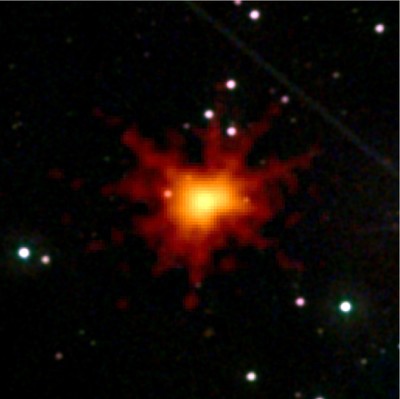
The brightest gamma-ray burst ever seen in X-rays temporarily blinded Swift's X-ray Telescope on 21 June 2010. This image merges the X-rays (red to yellow) with the same view from Swift's Ultraviolet/Optical Telescope, which showed nothing extraordinary. Credit: NASA/Swift/Stefan Immler


The brightest gamma-ray burst ever seen in X-rays temporarily blinded Swift’s X-ray Telescope on 21 June 2010. This image merges the X-rays (red to yellow) with the same view from Swift’s Ultraviolet/Optical Telescope, which showed nothing extraordinary. Credit: NASA/Swift/Stefan Immler
The paper states that there is a 50% chance of a lethal GRB’s having occurred near Earth within the last 500 million years. If a stellar system is within 13,000 light years (4 kilo-parsecs) of the galactic center, the odds rise to 95%. Effectively, this makes the densest regions of all galaxies too prone to GRBs to permit complex life to persist.

The Earth lies at 8.3 kilo-parsecs (27,000 light years) from the galactic center and the astrophysicists’ work also concludes that the chances of a lethal GRB in a 500 million year span does not drop below 50% until beyond 10 kilo-parsecs (32,000 light years). So Earth’s odds have not been most favorable, but obviously adequate. Star systems further out from the center are safer places for life to progress and evolve. Only the outlying low star density regions of large galaxies keep life out of harm’s way of gamma ray bursts.

The paper continues by describing their assessment of the effect of GRBs throughout the Universe. They state that only approximately 10% of galaxies have environments conducive to life when GRB events are a concern. Based on previous work and new data, galaxies (their stars) had to reach a metallicity content of 30% of the Sun’s, and the galaxies needed to be at least 4 kilo-parsecs (13,000 light years) in diameter to lower the risk of lethal GRBs. Simple life could survive repeated GRBs. Evolving to higher life forms would be repeatedly set back by mass extinctions.

Piran’s and Jimenez’s work also reveals a relation to a cosmological constant. Further back in time, metallicity within stars was lower. Only after generations of star formation – billions of years – have heavier elements built up within galaxies. They conclude that complex life such as on Earth – from jelly fish to humans – could not have developed in the early Universe before Z > 0.5, a cosmological red-shift equal to ~5 billion years ago or longer ago. Analysis also shows that there is a 95% chance that Earth experienced a lethal GRB within the last 5 billion years.

The question of what effect a nearby GRB could have on life has been raised for decades. In 1974, Dr. Malvin Ruderman of Columbia University considered the consequences of a nearby supernova on the ozone layer of the Earth and on terrestrial life. His and subsequent work has determined that cosmic rays would lead to the depletion of the ozone layer, a doubling of the solar ultraviolet radiation reaching the surface, cooling of the Earth’s climate, and an increase in NOx and rainout that effects biological systems. Not a pretty picture. The loss of the ozone layer would lead to a domino effect of atmospheric changes and radiation exposure leading to the collapse of ecosystems. A GRB is considered the most likely cause of the mass extinction at the end of the Ordovician period, 450 million years ago; there remains considerable debate on the causes of this and several other mass extinction events in Earth’s history.

The paper focuses on what are deemed long GRBs – lGRBs – lasting several seconds in contrast to short GRBs which last only a second or less. Long GRBs are believed to be due to the collapse of massive stars such as seen in supernovas, while sGRBs are from the collision of neutron stars or black holes. There remains uncertainty as to the causes, but the longer GRBs release far greater amounts of energy and are most dangerous to ecosystems harboring complex life.

The paper narrows the time and space available for complex life to develop within our Universe. Over the age of the Universe, approximately 14 billion years, only the last 5 billion years have been conducive to the creation of complex life. Furthermore, only 10% of the galaxies within the last 5 billion years provided such environments. And within only larger galaxies, only the outlying areas provided the safe distances needed to evade lethal exposure to a gamma ray burst.

This work reveals how well our Solar System fits within the ideal conditions for permitting complex life to develop. We stand at a fairly good distance from the Milky Way’s galactic center. The age of our Solar System, at approximately 4.6 billion years, lies within the 5 billion year safe zone in time. However, for many other stellar systems, despite how many are now considered to exist throughout the Universe – 100s of billions in the Milky Way, trillions throughout the Universe – simple is probably a way of life due to GRBs. This work indicates that complex life, including intelligent life, is likely less common when just taking the effect of gamma ray bursts into consideration.

References:

On the role of GRBs on life extinction in the Universe, Tsvi Piran, Raul Jimenez, Science, Nov 2014, pre-print


About 

Contributing writer Tim Reyes is a former NASA software engineer and analyst who has supported development of orbital and lander missions to the planet Mars since 1992. He has an M.S. in Space Plasma Physics from University of Alabama, Huntsville.

Live Discussion: How Good is the Science of “Interstellar?”

Live Discussion: How Good is the Science of “Interstellar?”:

by Nancy Atkinson on November 26, 2014
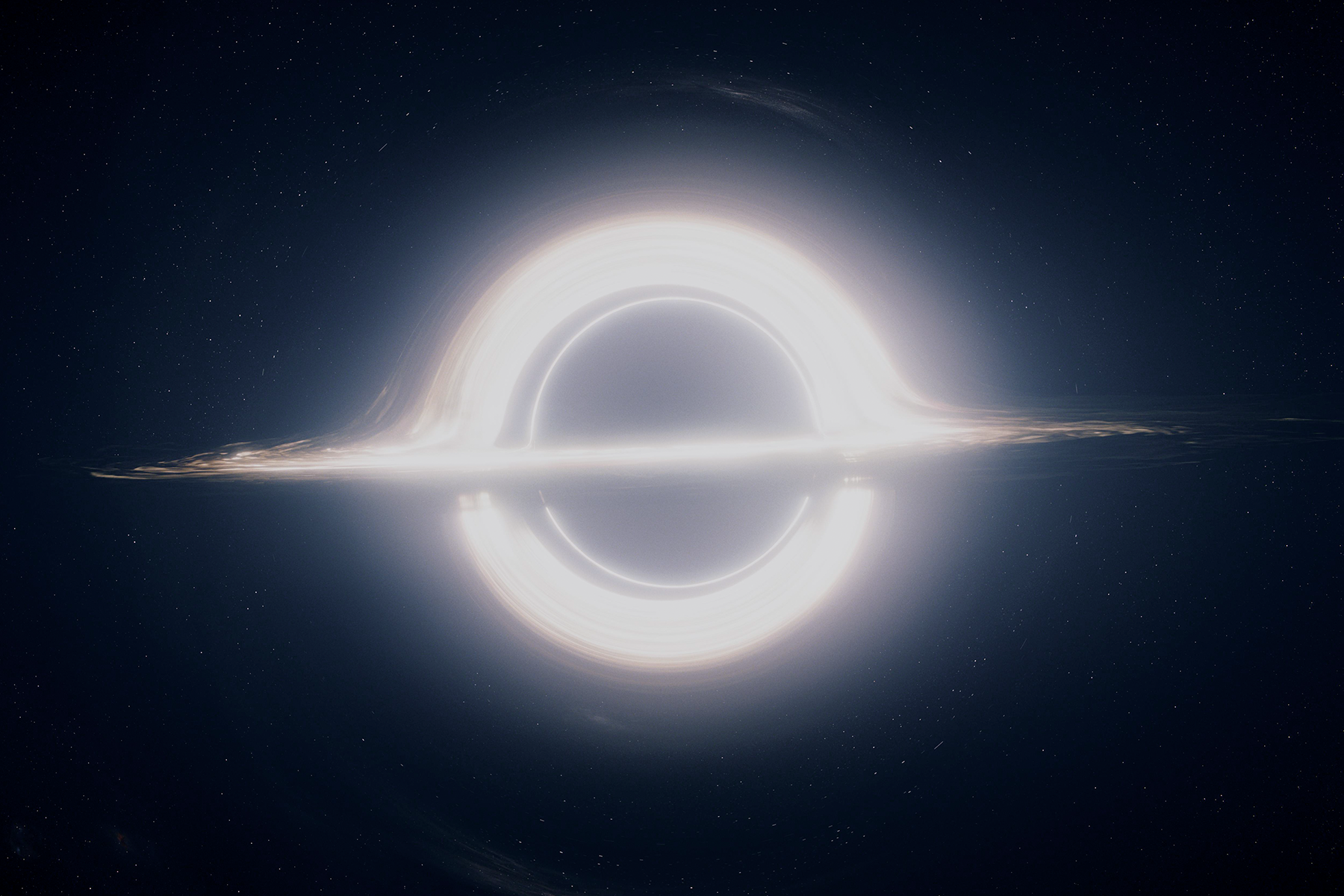
Kip Thorne’s concept for a black hole in 'Interstellar.' Image Credit: Paramount Pictures


Kip Thorne’s concept for a black hole in ‘Interstellar.’ Image Credit: Paramount Pictures
The highly anticipated film “Interstellar” is based on science and theory; from wormholes, to the push-pull of gravity on a planet, to the way a black hole might re-adjust your concept of time. But just how much of the movie is really true to what we know about the Universe? There has also been some discussion whether the physics used for the visual effects in the movie actually was good enough to produce some science. But how much of it is just creative license?

Today, (Wed. November 26) at 19:00 UTC (3 pm EDT, 12:00 pm PDT), the Kavli foundation hosts a live discussion with three astrophysicists who will answer viewers’ questions about black holes, relativity and gravity, to separate the movie’s science facts from its science fiction.

According to the Kavli twitter feed, the Hangout will even help you understand what in the world happened at the end of the movie!

Scientists Mandeep Gill, Eric Miller and Hardip Sanghera will answer your questions in the live Google Hangout.

Submit questions ahead of and during the webcast by emailing info@kavlifoundation.org or by using the hashtag #KavliSciBlog on Twitter or Google+.

You can watch today’s hangout here:


Also, you can enjoy the “Interstellar” trailer:

NASA’s Van Allen Probes Spot Impenetrable Radiation Barrier in Space

NASA’s Van Allen Probes Spot Impenetrable Radiation Barrier in Space:

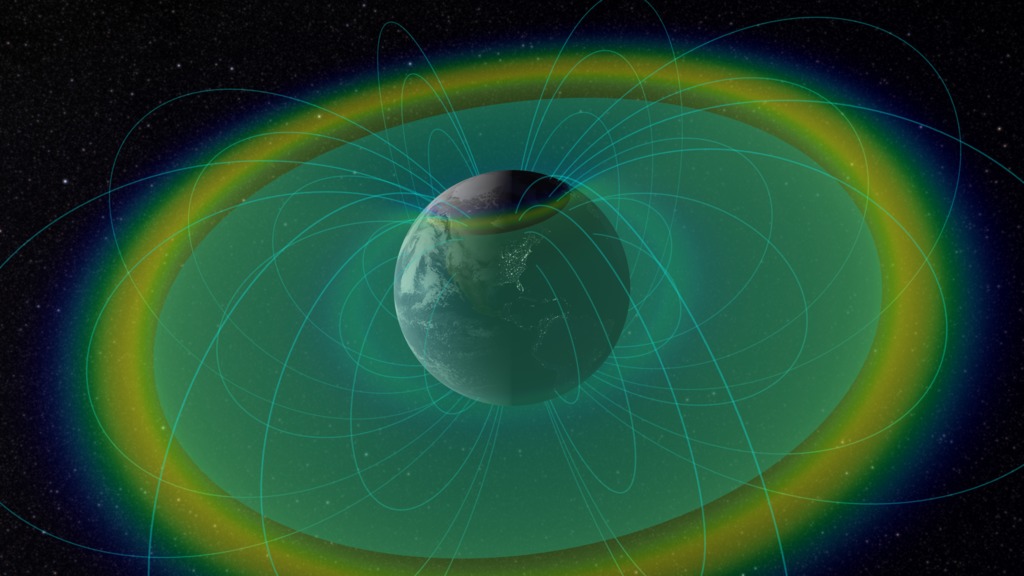
Visualization of the radiation belts with confined charged particles (blue & yellow) and plasmapause boundary (blue-green surface). Image Credit: NASA/Goddard


Visualization of the radiation belts with confined charged particles (blue & yellow) and plasmapause boundary (blue-green surface). Credit: NASA/Goddard
It’s a well-known fact that Earth’s ozone layer protects us from a great deal of the Sun’s ultra-violet radiation. Were it not for this protective barrier around our planet, chances are our surface would be similar to the rugged and lifeless landscape we observe on Mars.

Beyond this barrier lies another – a series of shields formed by a layer of energetic charged particles that are held in place by the Earth’s magnetic field. Known as the Van Allen radiation belts, this wall prevents the fastest, most energetic electrons from reaching Earth.

And according to new research from NASA’s Van Allen probes, it now appears that these belts may be nearly impenetrable, a finding which could have serious implications for future space exploration and research.

The existence of a belt of charged particles trapped by the Earth’s magnetosphere has been the subject of research since the early 20th century. However, it was not until 1958 that the Explorer 1 and Explorer 3 spacecrafts confirmed the existence of the belt, which would then be mapped out by the Explorer 4, Pioneer 3, and Luna 1 missions.


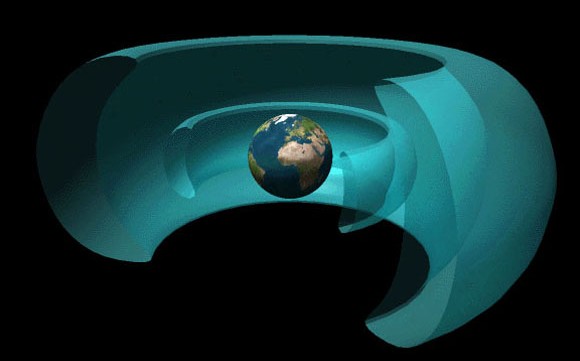
Two giant belts of radiation surround Earth. The inner belt is dominated by protons and the outer one by electrons. Credit: NASA


Two giant belts of radiation surround Earth. The inner belt is dominated by protons and the outer one by electrons. Credit: NASA
Since that time, scientists have discovered much about this belt, including how it interacts with other fields around our planet to form a nearly-impenetrable barrier to incoming electrons.

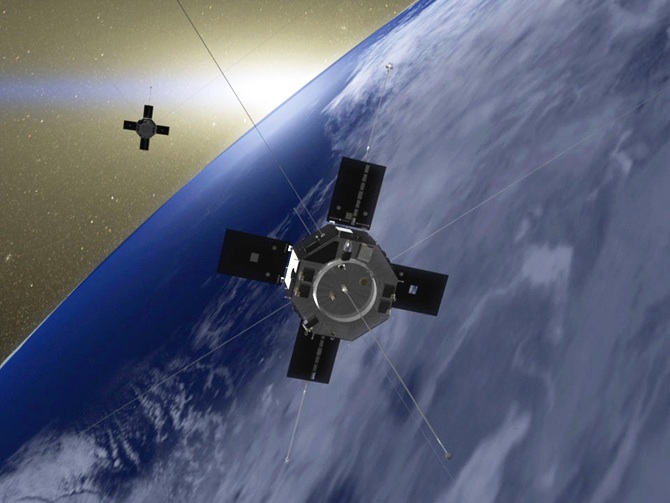
This discovery was made using NASA’s Van Allen Probes, launched in August 2012 to study the region. According to the observations made by the probes, this region can wax and wane in response to incoming energy from the sun, sometimes swelling up enough to expose satellites in low-Earth orbit to damaging radiation.

“This barrier for the ultra-fast electrons is a remarkable feature of the belts,” said Dan Baker, a space scientist at the University of Colorado in Boulder and first author of the paper. “We’re able to study it for the first time, because we never had such accurate measurements of these high-energy electrons before.”

Understanding what gives the radiation belts their shape and what can affect the way they swell or shrink helps scientists predict the onset of those changes. Such predictions can help scientists protect satellites in the area from the radiation.

In the decades since they were first discovered, scientists have learned that the size of the two belts can change – or merge, or even separate into three belts occasionally. But generally the inner belt stretches from 644 km to 10,000 km (400 – 6,000 mi) above the Earth’s surface while the outer belt stretches from 13,500 t0 58,000 km (8,400 – 36,000 mi).


Artist's rendition of Van Allen Probes A and B in Earth orbit. Credit: NASA


Artist’s rendition of Van Allen Probes A and B in Earth orbit. Credit: NASA
Up until now, scientists have wondered why these two these belts have existed separately. Why, they have wondered, is there a fairly empty space between the two that appears to be free of electrons? That is where the newly discovered barrier comes in.

The Van Allen Probes data showed that the inner edge of the outer belt is, in fact, highly pronounced. For the fastest, highest-energy electrons, this edge is a sharp boundary that, under normal circumstances, cannot be penetrated.

“When you look at really energetic electrons, they can only come to within a certain distance from Earth,” said Shri Kanekal, the deputy mission scientist for the Van Allen Probes at NASA’s Goddard Space Flight Center in Greenbelt, Maryland, and a co-author on the Nature paper. “This is completely new. We certainly didn’t expect that.”

The team looked at possible causes. They determined that human-generated transmissions were not the cause of the barrier. They also looked at physical causes, asking if the shape of the Earth’s magnetic field could be the cause of the boundary. However, NASA scientists studied and eliminated that possibility and determined that the presence of other space particles appears to be the more likely cause.


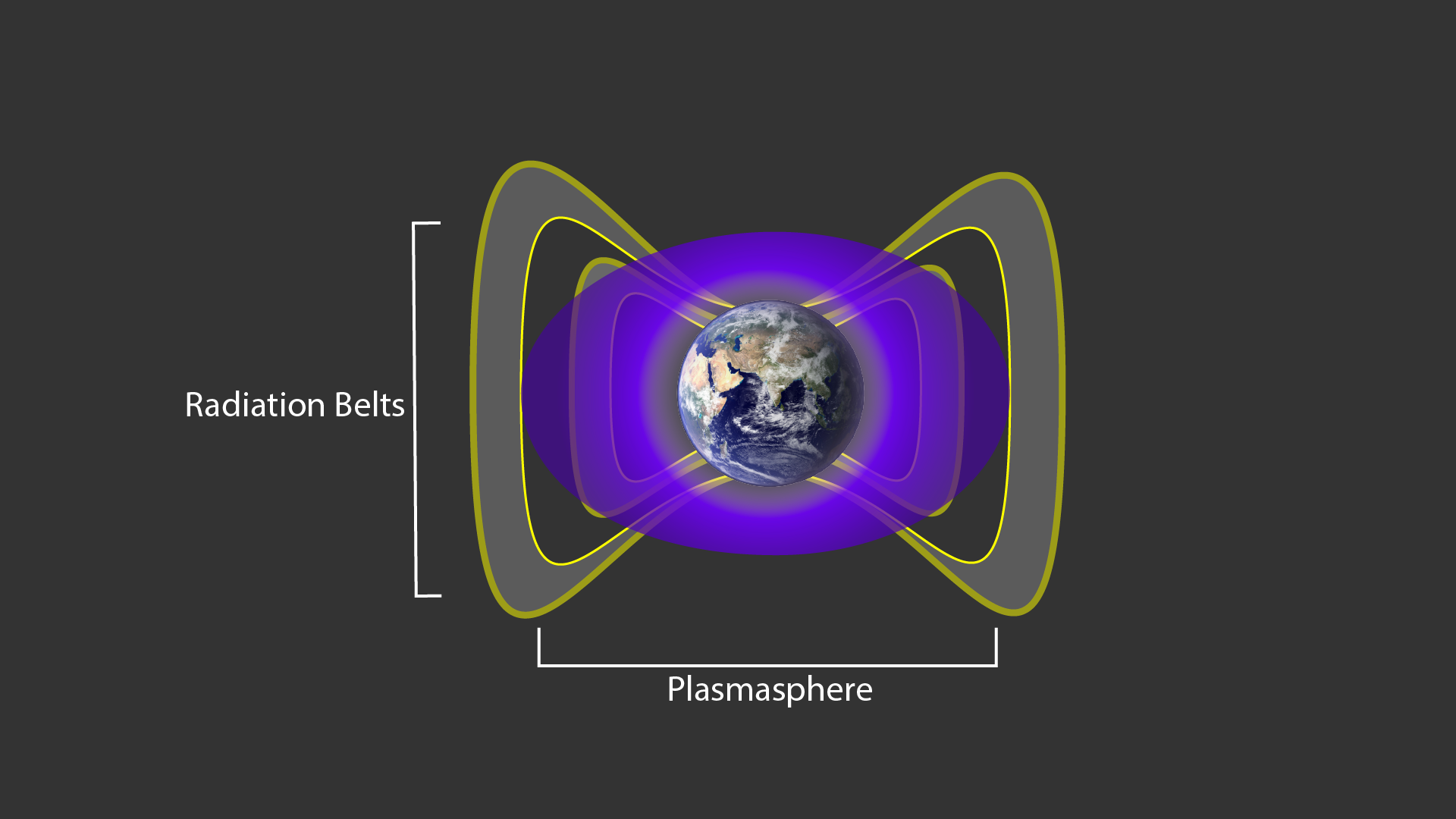
A cloud of cold, charged gas around Earth, called the plasmasphere and seen here in purple, interacts with the particles in Earth's radiation belts (shown in grey). Image Credit: NASA/Goddard


A cloud of cold, charged gas around Earth called the plasmasphere (seen here in purple), interacts with the particles in Earth’s radiation belts (shown in grey). Image Credit: NASA/Goddard
The radiation belts are not the only particle structures surrounding Earth. A giant cloud of relatively cool, charged particles called the plasmasphere fills the outermost region of Earth’s atmosphere, beginning at about 600 miles up and extending partially into the outer Van Allen belt. The particles at the outer boundary of the plasmasphere cause particles in the outer radiation belt to scatter, removing them from the belt.

This scattering effect is fairly weak and might not be enough to keep the electrons at the boundary in place, except for a quirk of geometry – the radiation belt electrons move incredibly quickly, but not toward Earth. Instead, they move in giant loops around Earth.

The Van Allen Probes’ data show that in the direction toward Earth, the most energetic electrons have very little motion at all – just a gentle, slow drift that occurs over the course of months. This movement is so slow and weak that it can be rebuffed by the scattering caused by the plasmasphere.

This also helps explain why – under extreme conditions, when an especially strong solar wind or a giant solar eruption such as a coronal mass ejection sends clouds of material into near-Earth space – the electrons from the outer belt can be pushed into the usually-empty slot region between the belts.

“The scattering due to the plasmapause is strong enough to create a wall at the inner edge of the outer Van Allen Belt,” said Baker. “But a strong solar wind event causes the plasmasphere boundary to move inward.”

A massive inflow of matter from the sun can erode the outer plasmasphere, moving its boundaries inward and allowing electrons from the radiation belts the room to move further inward too.

The Johns Hopkins Applied Physics Laboratory in Laurel, Maryland, built and operates the Van Allen Probes for NASA’s Science Mission Directorate. The mission is the second in NASA’s Living With a Star program, managed by Goddard.

A paper on these results appeared in the Nov. 26, 2014, issue of Nature magazine. And be sure to watch this animated video produced by the Goddard Space Center that explains the Van Allen belt in brief:


Further Reading: NASA


About 

Author, freelance writer, educator, Taekwon-Do instructor, and loving hubby, son and Island boy!

“Eye of Sauron” Galaxy Used For New Method of Galactic Surveying

“Eye of Sauron” Galaxy Used For New Method of Galactic Surveying:


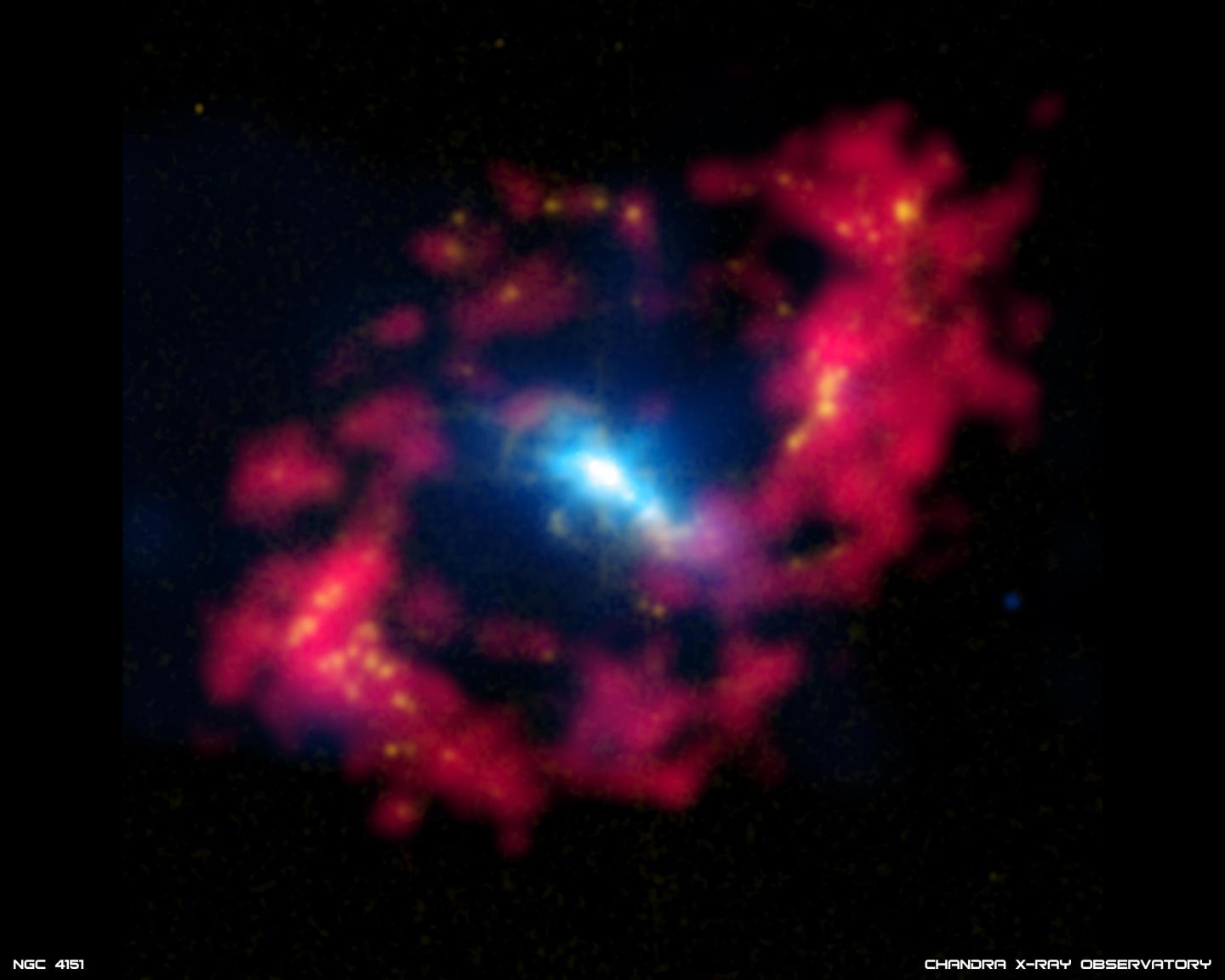
Image of the spiral galaxy NGC 4151, aka. "Sauron's Eye". Credit: X-ray: NASA/CXC/CfA/J.Wang et al.; Optical: Isaac Newton Group of Telescopes, La Palma/Jacobus Kapteyn Telescope; Radio: NSF/NRAO/VLA.


Image of the spiral galaxy NGC 4151, aka “The Eye of Sauron”. Credit: NASA/Isaac Newton Group of Telescopes, La Palma/Jacobus Kapteyn Telescope/NSF/NRAO/VLA
Determining the distance of galaxies from our Solar System is a tricky business. Knowing just how far other galaxies are in relation to our own is not only key to understanding the size of the universe, but its age as well. In the past, this process relied on finding stars in other galaxies whose absolute light output was measurable. By gauging the brightness of these stars, scientists have been able to survey certain galaxies that lie 300 million light years from us.

However, a new and more accurate method has been developed, thanks to a team of scientists led by Dr. Sebastian Hoenig from the University of Southampton. Similar to what land surveyors use here on Earth, they measured the physical and angular (or apparent) size of a standard ruler in the galaxy to calibrate distance measurements.


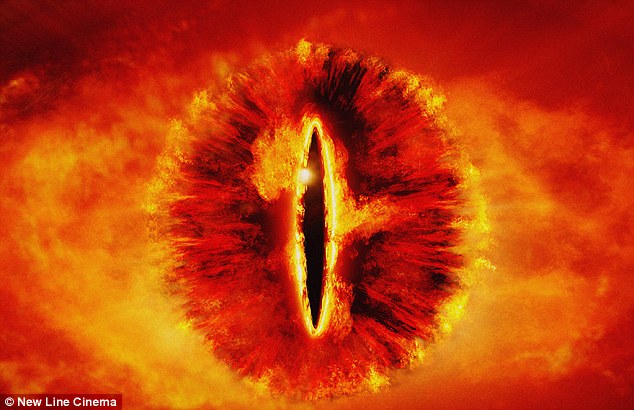
Hoenig and his team used this method at the W. M. Keck Observatory, near the summit of Mauna Kea in Hawaii, to accurately determine for the first time the distance to the NGC 4151 galaxy – otherwise known to astronomers as the “Eye of Sauron”.The galaxy NGC 4151, which is dubbed the “Eye of Sauron” by astronomers for its similarity to the depiction of Sauron in “The Lord of the Rings” trilogy, is important for accurately measuring black hole masses.


Credit: New Line Cinema


Credit: New Line Cinema
Recently reported distances range from 4 to 29 megaparsecs, but using this new method the researchers calculated a distance of 19 megaparsecs to the supermassive black hole.

Indeed, as in the famous saga, a ring plays a crucial role in this new measurement. Scientists have observed that all big galaxies in the universe have a supermassive black hole in their center. And in about a tenth of all galaxies, these supermassive black holes continue to grow by swallowing huge amounts of gas and dust from their surrounding environments.

In this process, the material heats up and becomes very bright – becoming the most energetic sources of emission in the universe known as active galactic nuclei (AGN).

The hot dust forms a ring around the supermassive black hole and emits infrared radiation, which the researchers used as the ruler. However, the apparent size of this ring is so small that the observations were carried out using infrared interferometry to combine W. M. Keck Observatory’s twin 10-meter telescopes, to achieve the resolution power of an 85m telescope.


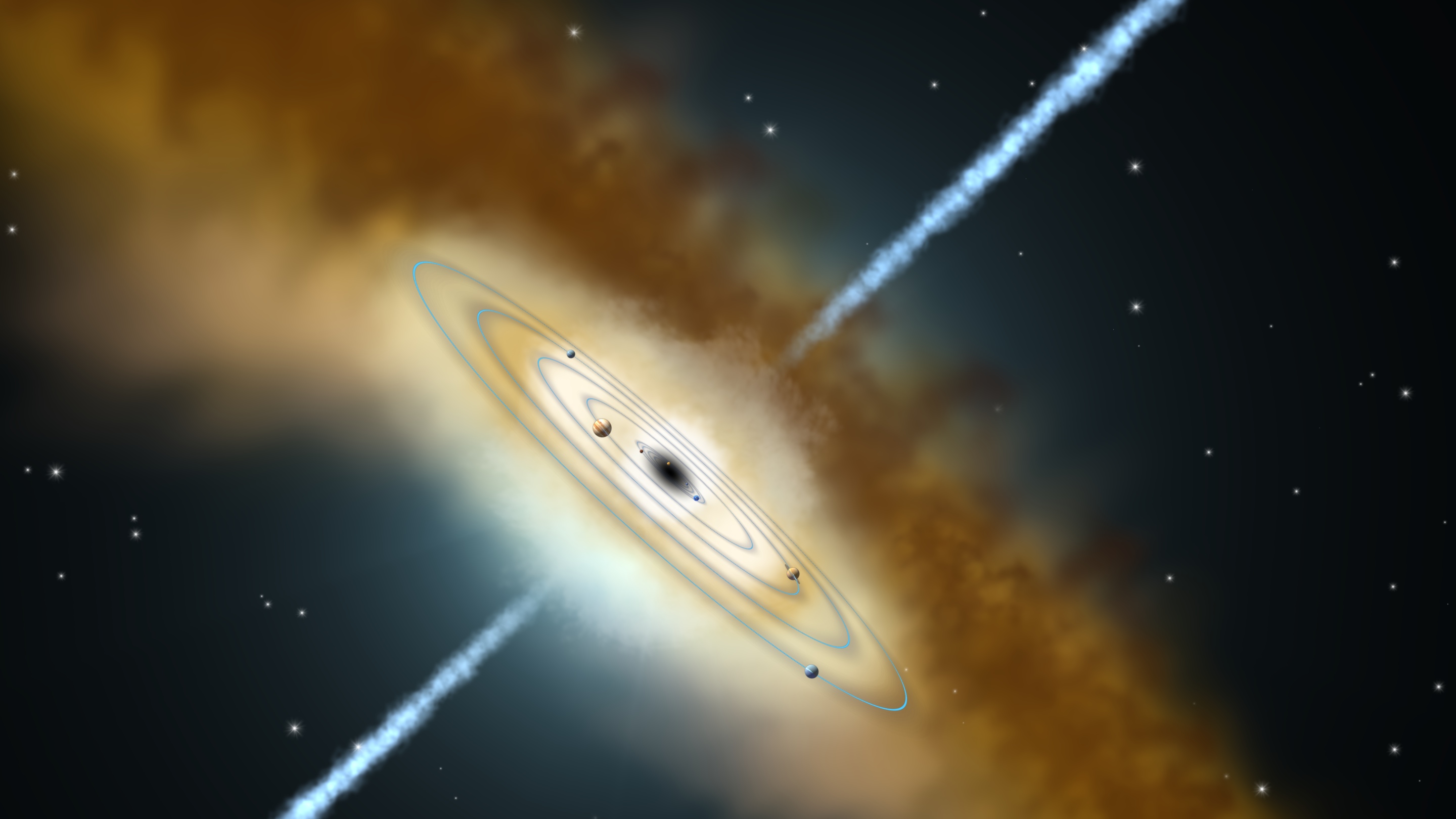
Artist's concept of the AGN lying at the center of the NGC 4151 galaxy. Credit: NASA/Goddard Media Studios


Artist’s concept of the AGN lying at the center of the NGC 4151 galaxy with the Solar System overlaid to provide scale. Credit: NASA/Goddard Media Studios
To measure the physical size of the dusty ring, the researchers measured the time delay between the emission of light from very close to the black hole and the infrared emission. This delay is the distance the light has to travel (at the speed-of-light) from close to the black hole out to the hot dust.

By combining this physical size of the dust ring with the apparent size measured with the data from the Keck interferometer, the researchers were able to determine the distance to the galaxy NGC 4151.

As Dr. Hoenig said: “One of the key findings is that the distance determined in this new fashion is quite precise – with only about 10 per cent uncertainty. In fact, if the current result for NGC 4151 holds for other objects, it can potentially beat any other current methods to reach the same precision to determine distances for remote galaxies directly based on simple geometrical principles. Moreover, it can be readily used on many more sources than the current most precise method.”

“Such distances are key in pinning down the cosmological parameters that characterize our universe or for accurately measuring black hole masses,” he added. “Indeed, NGC 4151 is a crucial anchor to calibrate various techniques to estimate black hole masses. Our new distance implies that these masses may have been systematically underestimated by 40 per cent.”

Dr. Hoenig, together with colleagues in Denmark and Japan, is currently setting up a new program to extend their work to many more AGN. The goal is to establish precise distances to a dozen galaxies in this new way and use them to constrain cosmological parameters to within a few per cent. In combination with other measurements, this will provide a better understanding of the history of expansion of our universe.

The research was published on Wednesday, Nov. 26th in the online edition of the journal Nature.


About 

Author, freelance writer, educator, Taekwon-Do instructor, and loving hubby, son and Island boy!

Astronomers Poised to Capture Image of Supermassive Milky Way Black Hole

Astronomers Poised to Capture Image of Supermassive Milky Way Black Hole:


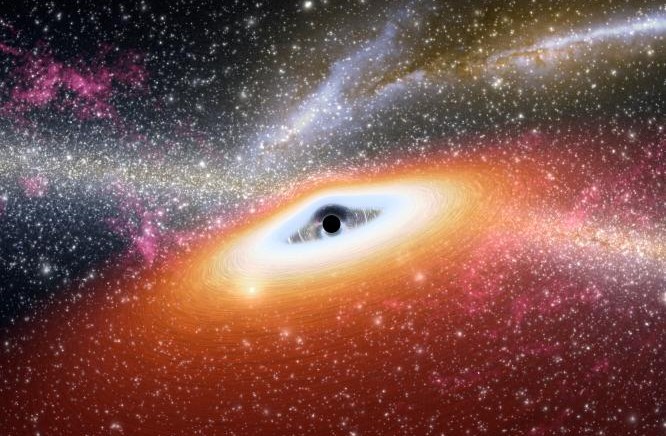
This artist's conception illustrates one of the most primitive supermassive black holes known (central black dot) at the core of a young, star-rich galaxy. Image credit: NASA/JPL-Caltech


Artist’s concept of one of the most primitive supermassive black holes (central black dot) at the core of a young, star-rich galaxy. Image credit: NASA/JPL-Caltech
Scientists have long suspected that supermassive black holes (SMBH) reside at the center of every large galaxy in our universe. These can be billions of times more massive than our sun, and are so powerful that activity at their boundaries can ripple throughout their host galaxies.

In the case of the Milky Way galaxy, this SMBH is believed to correspond with the location of a complex radio source known as Sagittarius A*.  Like all black holes, no one has even been able to confirm that they exist, simply because no one has ever been able to observe one.

But thanks to researchers working out of MIT’s Haystack Observatory, that may be about to change. Using a new telescope array known as the “Event Horizon Telescope” (EHT), the MIT team hopes to produce this “image of the century” very soon.Initially predicted by Einstein, scientists have been forced to study black holes by observing their apparent effect on space and matter in their vicinity. These include stellar bodies that have periodically disappeared into dark regions, never to be heard from again.

As Sheperd Doeleman, assistant director of the Haystack Observatory at Massachusetts Institute of Technology (MIT), said of black holes: “It’s an exit door from our universe. You walk through that door, you’re not coming back.”


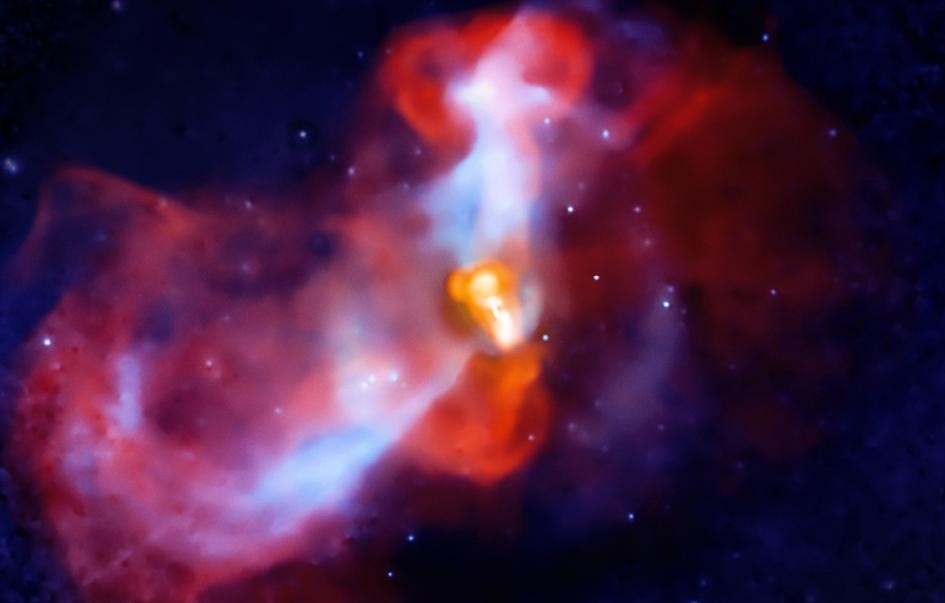
Image of the M87 Galaxy, 50 million ly from the Milky Way, which is believed to have a SMBH at its center. Credit: NASA/CXC/KIPAC/NSF/NRAO/AUI


Image of the M87, a giant elliptical galaxy that is believed to have a SMBH at its center. Credit: NASA/CXC/KIPAC/NSF/NRAO/AUI
As the most extreme object predict by Einstein’s theory of gravity, supermassive black holes are the places in space where, according to Doeleman, “gravity completely goes haywire and crushes an enormous mass into an incredibly close space.”

To create the EHT array, the scientists linked together radio dishes in Hawaii, Arizona, and California. The combined power of the EHT means that it can see details 2,000 times finer than what’s visible to the Hubble Space Telescope.

These radio dishes were then trained on M87, a galaxy some 50 million light years from the Milky Way in the Virgo Cluster, and Sagittarius A* to study the event horizons at their cores.

Other instruments have been able to observe and measure the effects of a black hole on stars, planets, and light. But so far, no one has ever actually seen the Milky Way’s Supermassive black hole.

According to David Rabanus, instruments manager for ALMA: “There is no telescope available which can resolve such a small radius,” he said. “It’s a very high-mass black hole, but that mass is concentrated in a very, very small region.”

Doeleman’s research focuses on studying super massive black holes with sufficient resolution to directly observe the event horizon. To do this his group assembles global networks of telescopes that observe at mm wavelengths to create an Earth-size virtual telescope using the technique of Very Long Baseline Interferometry (VLBI).

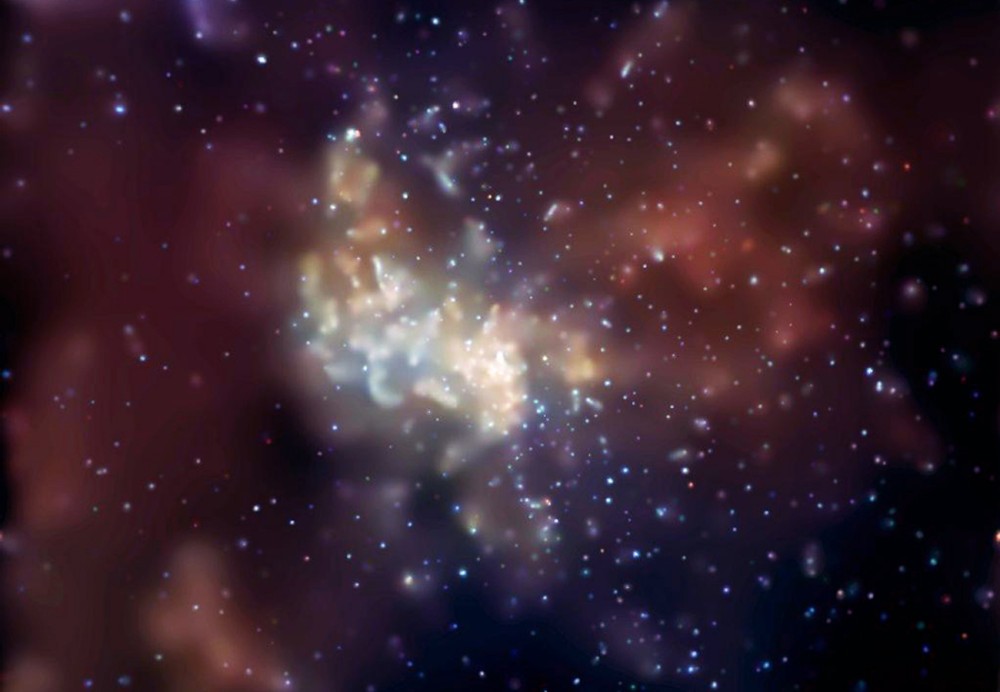
Sagittarius A
Image of Sagittarius A*, the complex radio source at the center of the Milky Way, and believed to be a SMBH. Credit: NASA/Chandra
“We target SgrA*, the 4 million solar mass black hole at the center of the Milky Way, and M87, a giant elliptical galaxy,” says Doeleman. “Both of these objects present to us the largest apparent event horizons in the Universe, and both can be resolved by (sub)mm VLBI arrays.” he added. “We call this project The Event Horizon Telescope (EHT).”

Ultimately, the EHT project is a world-wide collaboration that combines the resolving power of numerous antennas from a global network of radio telescopes to capture the first image ever of the most exotic object in our Universe – the event horizon of a black hole.

“In essence, we are making a virtual telescope with a mirror that is as big as the Earth,” said Doeleman who is the principal investigator of the Event Horizon Telescope. “Each radio telescope we use can be thought of as a small silvered portion of a large mirror. With enough such silvered spots, one can start to make an image.”

“The Event Horizon Telescope is the first to resolve spatial scales comparable to the size of the event horizon of a black hole,” said University of California, Berkeley astronomer Jason Dexter. “I don’t think it’s crazy to think we might get an image in the next five years.”

First postulated by Albert Einstein’s Theory of General Relativity, the existence of black holes has since been supported by decades’ worth of observations, measurements, and experiments. But never has it been possible to directly observe and image one of these maelstroms, whose sheer gravitational power twists and mangle the very fabric of space and time.

Finally being able to observe one will not only be a major scientific breakthrough, but could very well provide the most impressive imagery ever captured.


About 

Author, freelance writer, educator, Taekwon-Do instructor, and loving hubby, son and Island boy!

The “Potsdam Gravity Potato” Shows Variations in Earth’s Gravity

The “Potsdam Gravity Potato” Shows Variations in Earth’s Gravity:


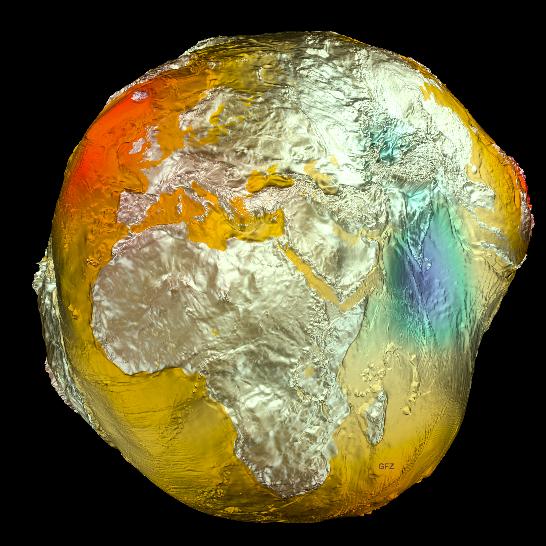
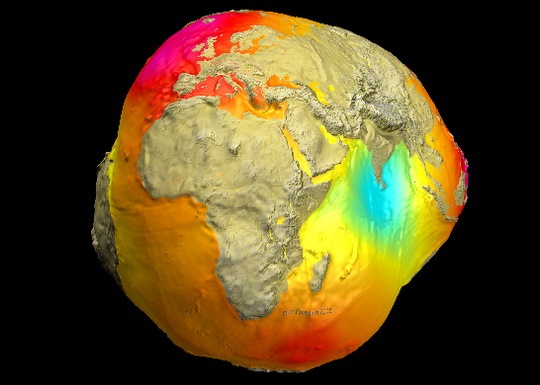
The Geoid 2011 model, based on data from LAGEOS, GRACE, GOCE and surface data. Credit: GFZ


The Earth’s gravitational model (aka the “Potsdam Potato”) is based on data from the LAGEOS, GRACE, and GOCE satellites and surface data. Credit: GFZ
People tend to think of gravity here on Earth as a uniform and consistent thing. Stand anywhere on the globe, at any time of year, and you’ll feel the same downward pull of a single G. But in fact, Earth’s gravitational field is subject to variations that occur over time. This is due to a combination of factors, such as the uneven distributions of mass in the oceans, continents, and deep interior, as well as climate-related variables like the water balance of continents, and the melting or growing of glaciers.

And now, for the first time ever, these variations have been captured in the image known as the “Potsdam Gravity Potato” –  a visualization of the Earth’s gravity field model produced by the German Research Center for Geophysics’ (GFZ) Helmholtz’s Center in Potsdam, Germany.

And as you can see from the image above, it bears a striking resemblance to a potato. But what is more striking is the fact that through these models, the Earth’s gravitational field is depicted not as a solid body, but as a dynamic surface that varies over time.This new gravity field model (which is designated EIGEN-6C) was made using measurements obtained from the LAGEOS, GRACE, and GOCE satellites, as well as ground-based gravity measurements and data from the satellite altimetry.


The Geoid 2005 model, which was based on data of two satellites (CHAMP and GRACE) plus surface data. Credit: GFZ


The 2005 model, which was based on data from the CHAMP and GRACE satellites and surface data, was less refined than the latest one. Credit: GFZ
Compared to the previous model obtained in 2005 (shown above), EIGEN-6C has a fourfold increase in spatial resolution.

“Of particular importance is the inclusion of measurements from the satellite GOCE, from which the GFZ did its own calculation of the gravitational field,” says Dr. Christoph Foerste who directs the gravity field work group at GFZ along with Dr. Frank Flechtner.

The ESA mission GOCE (Gravity Field and Steady-State Ocean Circulation Explorer) was launched in mid-March 2009 and has since been measuring the Earth’s gravitational field using satellite gradiometry – the study and measurement of variations in the acceleration due to gravity.

“This allows the measurement of gravity in inaccessible regions with unprecedented accuracy, for example in Central Africa and the Himalayas,” said Dr. Flechtner. In addition, the GOCE satellites offers advantages when it comes to measuring the oceans.

Within the many open spaces that lie under the sea, the Earth’s gravity field shows variations. GOCE is able to better map these, as well as deviations in the ocean’s surface – a factor known as “dynamic ocean topography” – which is a result of Earth’s gravity affecting the ocean’s surface equilibrium.


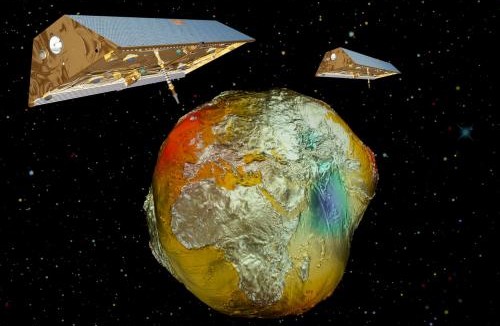
Twin-satellites GRACE with the earth's gravity field (vertically enhanceded) calculated from CHAMP data. Credit: GFZ


Twin-satellites GRACE with the earth’s gravity field (vertically enhanced) calculated from CHAMP data. Credit: GFZ
Long-term measurement data from the GFZ’s twin-satellite mission GRACE (Gravity Recovery And Climate Experiment) were also included in the model. By monitoring climate-based variables like the melting of large glaciers in the polar regions and the amount of seasonal water stored in large river systems, GRACE was able to determine the influence of large-scale temporal changes on the gravitational field.

Given the temporal nature of climate-related processes – not to mention the role played by Climate Change – ongoing missions are needed to see how they effect our planet long-term. Especially since the GRACE mission is scheduled to end in 2015.

In total, some 800 million observations went into the computation of the final model which is composed of more than 75,000 parameters representing the global gravitational field. The GOCE satellite alone made 27,000 orbits during its period of service (between March 2009 and November 2013) in order to collect data on the variations in the Earth’s gravitational field.

The final result achieved centimeter accuracy, and can serve as a global reference for sea levels and heights. Beyond the “gravity community,” the research has also piqued the interest of researchers in aerospace engineering, atmospheric sciences, and space debris.

But above all else, it offers scientists a way of imaging the world that is different from, but still complimentary to, approaches based on light, magnetism, and seismic waves. And it could be used for everything from determining the speed of ocean currents from space, monitoring rising sea levels and melting ice sheets, to uncovering hidden features of continental geology and even peeking at the convection force driving plate tectonics.

Further Reading: GFZ


About 

Author, freelance writer, educator, Taekwon-Do instructor, and loving hubby, son and Island boy!

Sail Past Orion to the Outer Limits of the Milky Way

Sail Past Orion to the Outer Limits of the Milky Way:


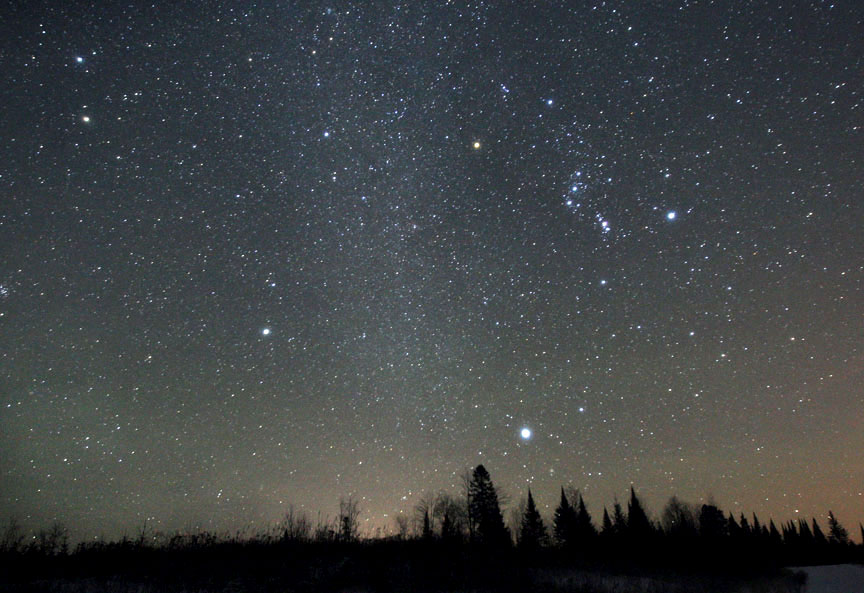
Orion (at right), Sirius (bottom) and the pale wintertime Milky Way (center) are well-placed for viewing around 11 o'clock local time in late November. Credit: Bob King


Orion (at right), Sirius (bottom) along with the pale band of the wintertime Milky Way  are well-placed for viewing around 11 o’clock local time in late November. Credit: Bob King
Several nights ago the chill of interstellar space refrigerated the countryside as temperatures fell well below zero. That didn’t discourage the likes of Orion and his seasonal friends Gemini, Perseus and Auriga. They only seemed to grow brighter as the air grew sharper.

Wending between these familiar constellations like a river steaming in the cold was the Milky Way. The name has always been slightly confusing as it refers to both the milky band of starlight and the galaxy itself.  Every single star you see at night belongs to our galaxy, a 100,000 light-year-wide flattened disk scintillating with over 400 billion suns.


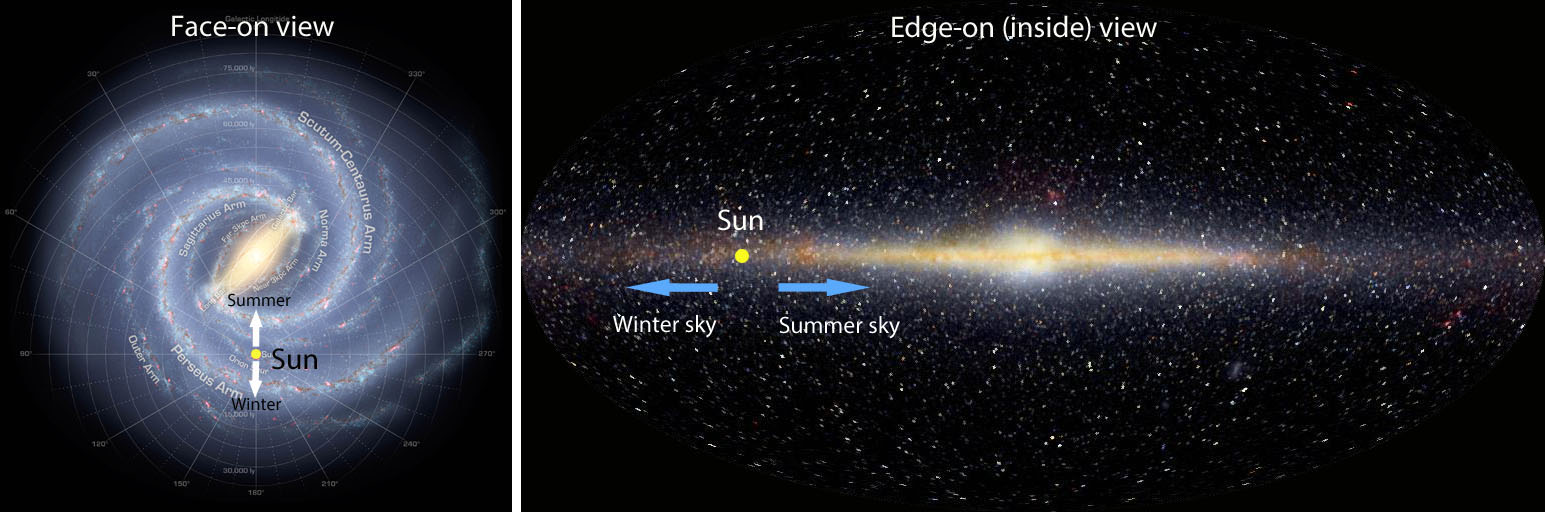
Our solar system lies in the flat plane of a barred spiral galaxy called the Milky Way. Looking through the plane, the stars pile up to form the Milky Way band. In summerr, we face toward the richer, denser core; in winter we look out toward the edge. Credit: NASA with annotations by the author


Face-on (left) and edge-on views of the Milky Way. Our solar system lies in the flat plane of a barred spiral galaxy called the Milky Way. Looking through the plane, the stars pile up to form the Milky Way band. In summer, we face toward the richer, denser core; in winter we look out toward the edge. Credit: NASA with annotations by the author
Earth, Sun and planets huddle together within the mid-plane of the disk, so that when we look straight into it, the density of stars piles up over thousands of light years to form a thick band across the sky. Since most of the stars are very distant and therefore faint, they can’t be seen individually with the naked eye. They blend together to give the Milky Way a milky or hazy look.


During a snowfall, we can see individual flakes nearby but more distant ones increase in number and blend into a uniform haze. Credit: Bob King


During a snowfall, we can see individual flakes nearby but more distant ones increase in number and blend to make a uniform haze similar to what happens when we look across the flat disk of the Milky Way. Credit: Bob King
In a snowstorm, we easily distinguish individual snowflakes falling in front of our face, but looking into the distance, the flakes blend together to create a white, foggy haze. Replace the snowflakes with stars and you have the Milky Way – with a caveat. If we lived in the center of our galaxy, the sky would be milky with stars in all directions just like that snowstorm, but since the Sun occupies the flat plane, they only appear thick when our line of sight is aimed along the galaxy’s equator. Look above and below the disk and the stars quickly thin out as our gaze pierces through the galaxy’s plane and into intergalactic space.


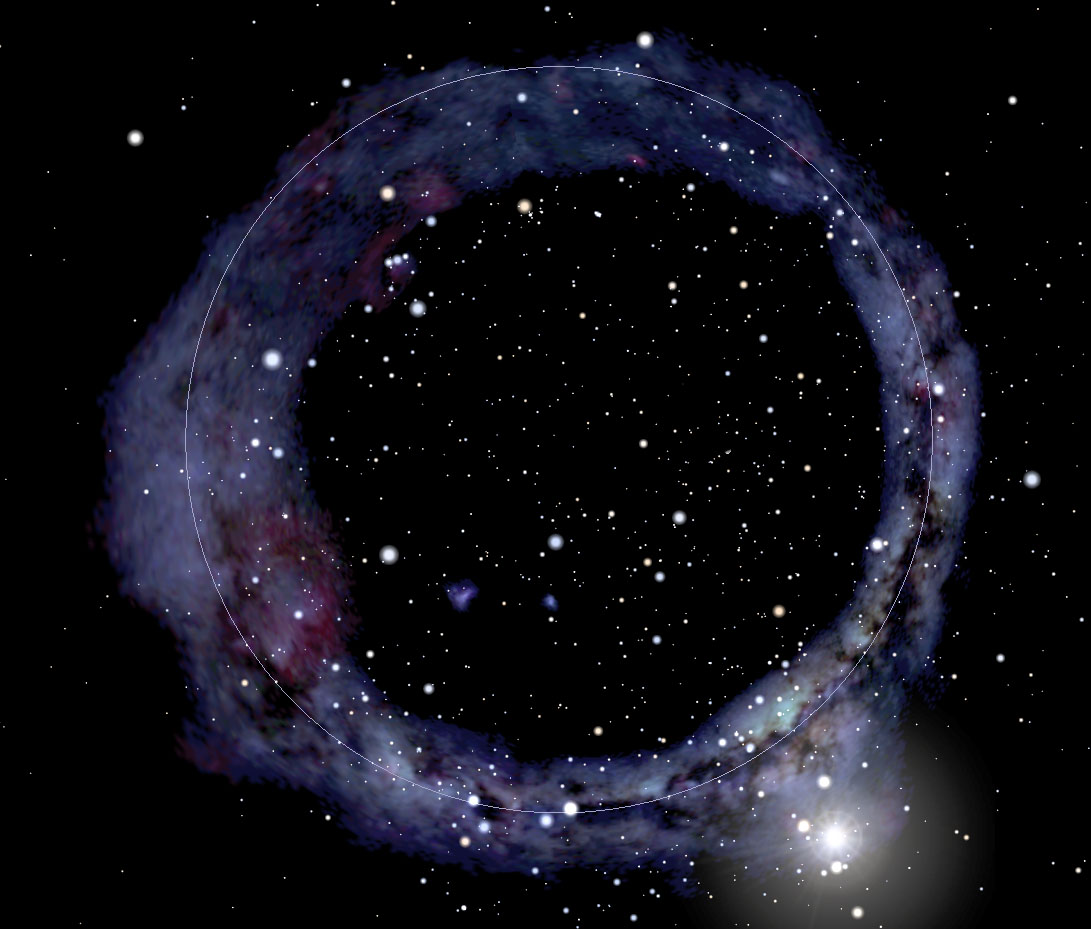
In this view, the ground is literally gone and we can see all around us in space. From this perspective we can see the full circle of the Milky Way. The blue line represents the galactic equator. Time is around midnight December 1st. Notice that the Sun is located in the same direction as the galaxy's center this month. Stellarium


In this view, the ground – Earth – has been removed from the picture and we can see all around us in space. Now we can see that the Milky Way band describes a full circle in the sky. The blue circle represents the galactic equator. The view shows the sky around midnight in early December. The Sun, at lower right, lies in the same direction as the galaxy’s center this month. Source: Stellarium
If you could float in space some distance from the brilliant ball of Earth, you’d see that the Milky Way band passes above, around and below you like a giant hula-hoop. Back on the ground, we can only see about two-thirds of the band over the course of a year. The other third is below the horizon and visible only from the opposite hemisphere, providing yet another good reason to make that trip to Tahiti or Ayers Rock in Australia.

Few know the winter version of the Milky Way that stands above the southeastern horizon around 10:30-11 p.m. local time on moonless nights in early December. No surprise, given it hardly compares to the brightness of the summertime version. This has much to do with where the Sun is located inside the galaxy, some 30,000 light years away from the center or more than halfway to the edge.


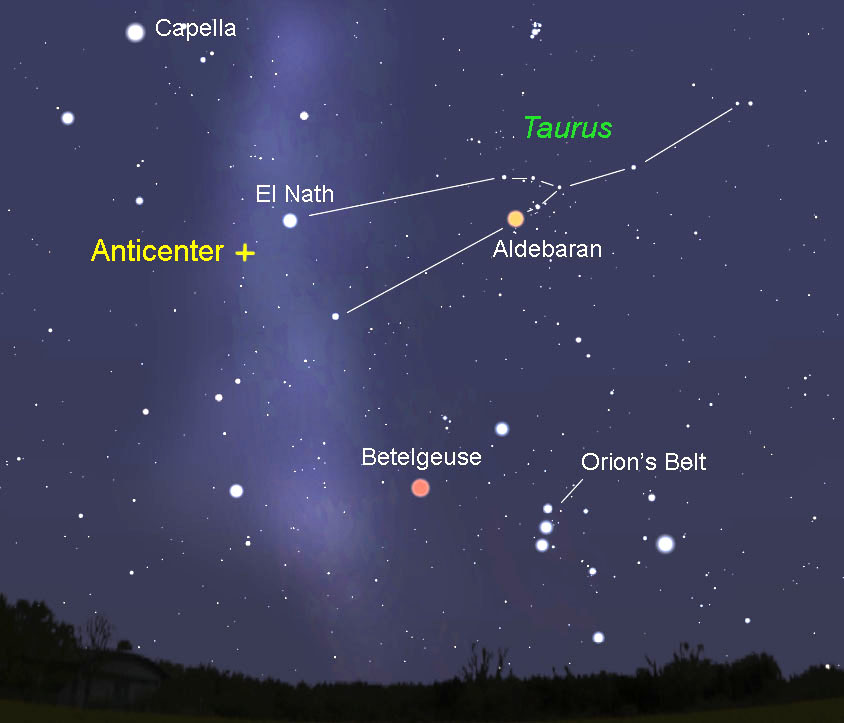
The opposite of the galaxy's center is the anticenter, located near El Nath in the northern horn of Taurus above the constellation Orion. Source: Stellarium


Opposite the galaxy’s center lies the anticenter, located near El Nath in the northern horn of Taurus above the constellation Orion. Source: Stellarium
On late fall and winter nights, our planet faces the galaxy’s outer suburbs and countryside where the stars thin out until giving way to relatively starless intergalactic space. Indeed, the anticenter of the Milky Way lies not far from the star El Nath (Beta Tauri) where Taurus meets Auriga. While the hazy band of the Milky Way is still visible through Auriga and Taurus, it’s thin and anemic compared to summer’s billowy star clouds.


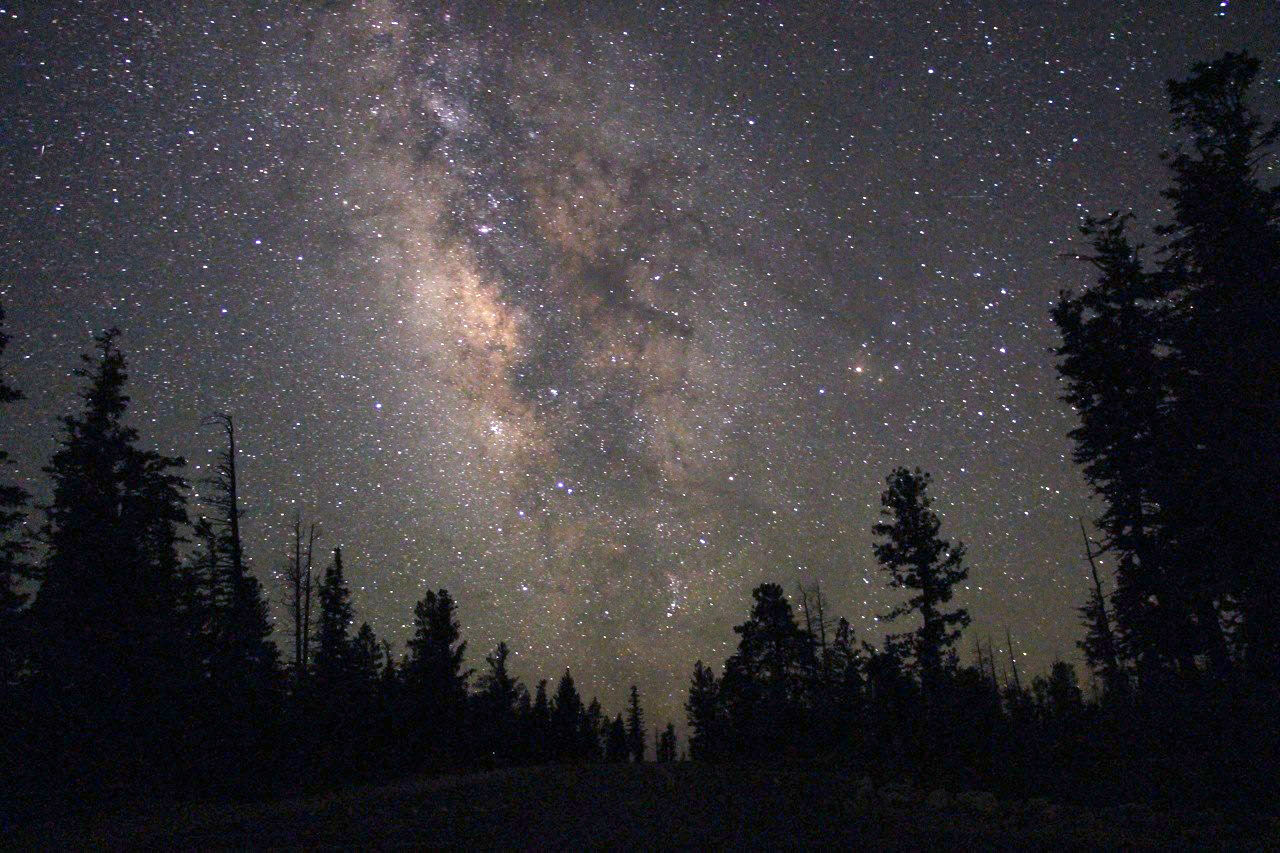
The summertime Milky Way from Scorpius to Cygnus is broader and brighter than the winter version because we look into the direction of its center. Credit: Stephen Bockhold


The summertime Milky Way from Scorpius to Cygnus is broader and brighter than the winter version because we face toward the galactic center at nightfall. Credit: Stephen Bockhold
At nightfall in July and August, we face toward the galaxy’s center where 30,000 light years worth of stars, star clouds and nebulae stack up to fatten the Milky Way into a bright, chunky arch on summer evenings compared to winter’s thin gruel.


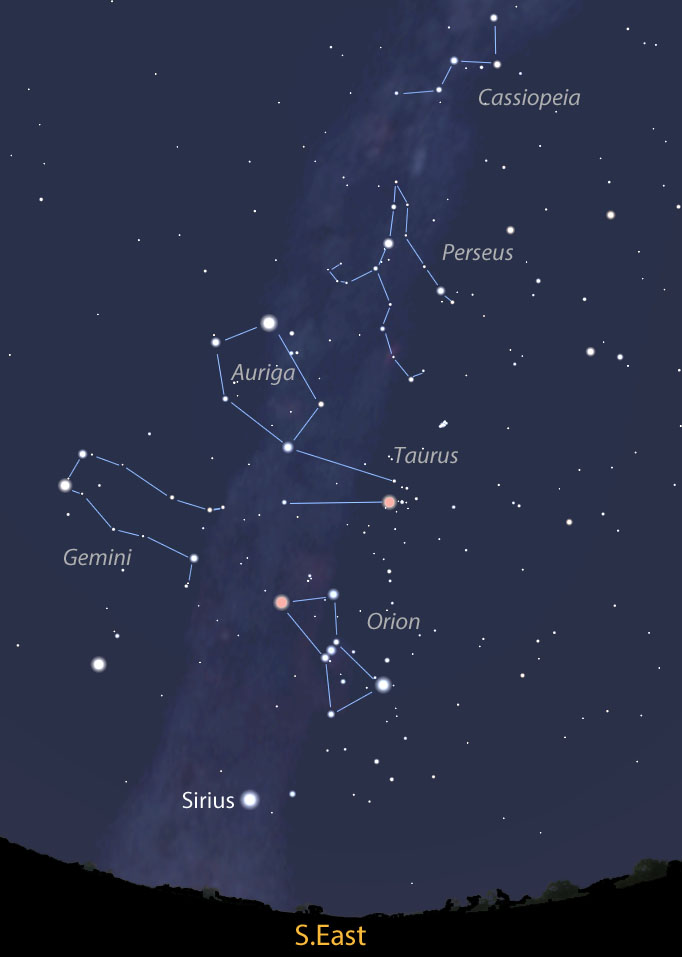
The slanting winter Milky Way touches many of the familiar, bright constellations of the December sky. This map shows the sky facing southeast around 11 o'clock local time in early December or 9 p.m. in late December. Source: Stellarium


The slanting winter Milky Way touches many of the familiar, bright constellations of December. This map shows the sky facing southeast around 11 o’clock local time in early December or 9 p.m. in late December. Source: Stellarium
The winter Milky Way starts east of brilliant Sirius and grazes the east side of Orion before ascending into Gemini and Auriga and arching over into the western sky to Cassiopeia’s “W”. Binoculars and telescopes resolve it into individual stars and star clusters and help us appreciate what a truly beautiful and rich place our galactic home is.

Few sights that impress us with the scope and scale of where we live than seeing the Milky Way under a dark sky during the silence of a winter night. Picture Earth and yourself as members of that glowing carpet of  stars, and when you can’t take the cold anymore, enjoy the delicious pleasure of stepping inside to unwrap and warm up. You’ve been on a long journey.


About 

I'm a long-time amateur astronomer and member of the American Association of Variable Star Observers (AAVSO). My observing passions include everything from auroras to Z Cam stars. Every day the universe offers up something both beautiful and thought-provoking. I also write a daily astronomy blog called Astro Bob.

Probing Pluto’s Paltry Atmosphere Using A Solar Eclipse And Spacecraft

Probing Pluto’s Paltry Atmosphere Using A Solar Eclipse And Spacecraft:


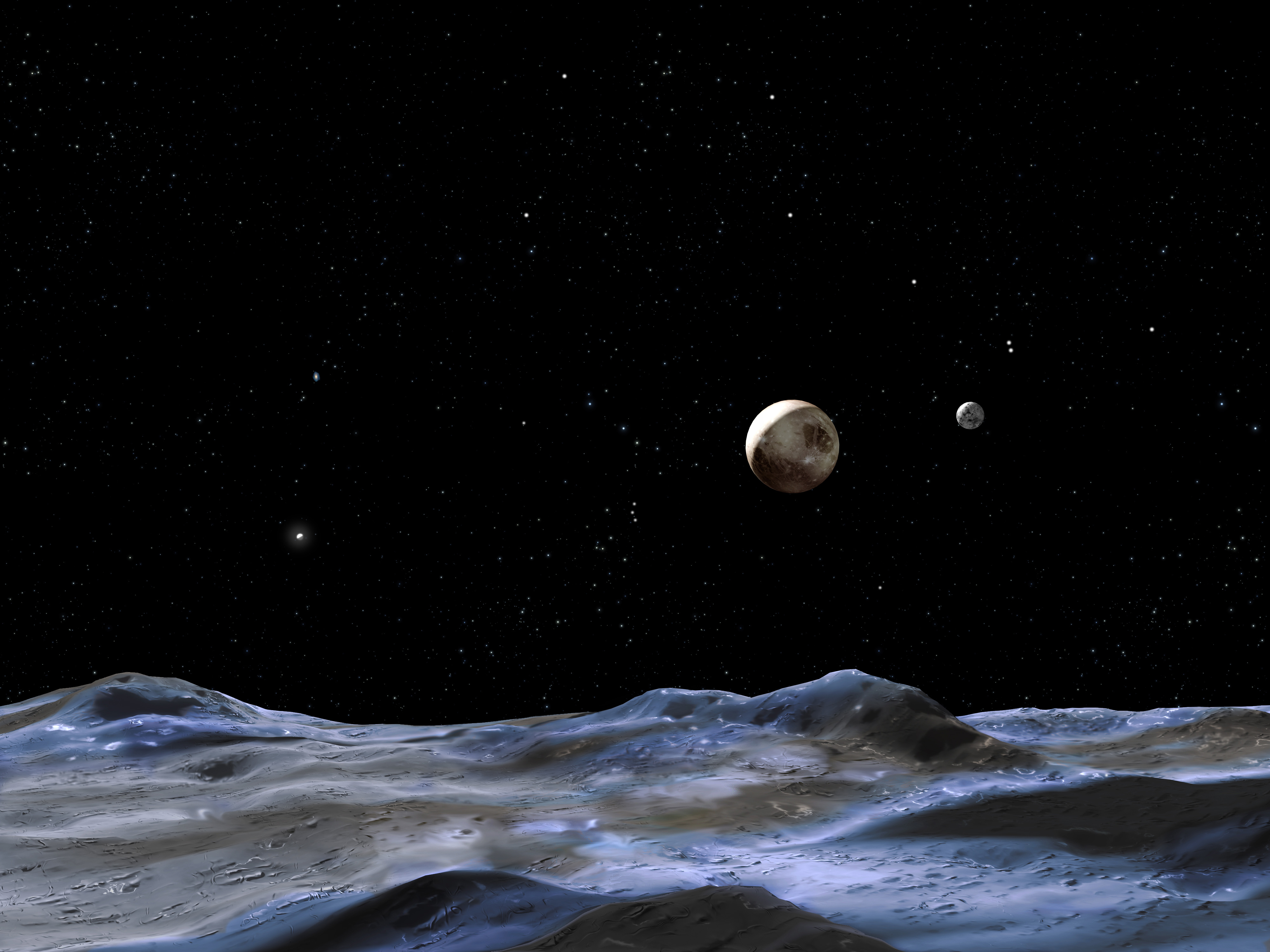
Artist's conception of the Pluto system from the surface of one of its moons. Credit: NASA, ESA and G. Bacon (STScI)


Artist’s conception of the Pluto system from the surface of one of its moons. Credit: NASA, ESA and G. Bacon (STScI)
Pluto is so far away from us and so tiny that it’s hard to glean even basic facts about it. What is its tenuous atmosphere made of? And how to observe it during NASA’s New Horizons very brief flyby next July? A recent Johns Hopkins blog post explains how a careful maneuver post-Pluto will let investigators use the Sun to examine the dwarf planet’s true nature.

Investigators will use an instrument called Alice, an ultraviolet spectrometer, to look at the atmosphere around Pluto and its largest moon, Charon. Alice is capable of examining the gases in the atmosphere using a large “airglow” aperture (4 by 4 centimeters) and also using the Sun for observation with a smaller, 1-mm solar occultation channel.

“Once New Horizons flies past Pluto, the trajectory will conveniently (meaning, carefully planned for many years) fly the spacecraft through Pluto’s shadow, creating an effect just like a solar eclipse here on Earth,” wrote Joel Parker, New Horizons co-investigator, in a blog post.


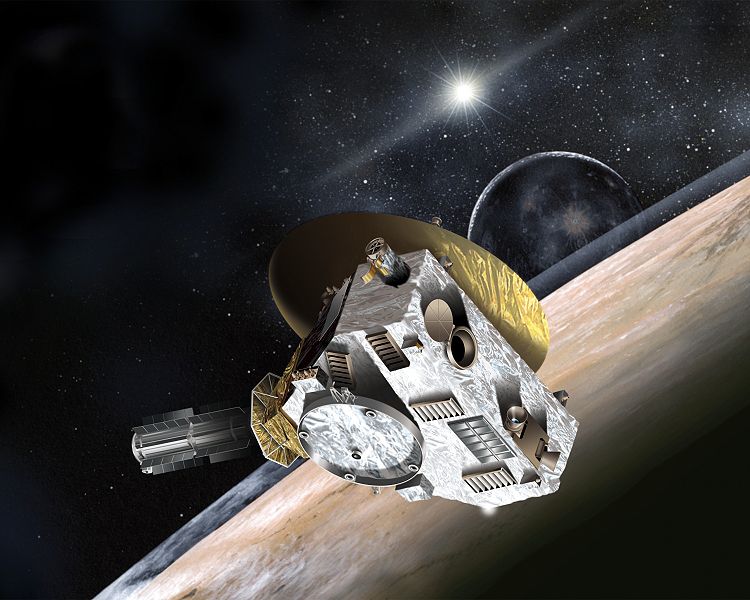
New Horizons


New Horizons spacecraft. Image Credit: NASA
“So we can (and will) just turn the spacecraft around and stare at the Sun, using Alice as it goes behind Pluto to measure how the Sun’s ultraviolet light changes as that light passes through deeper and deeper parts of Pluto’s atmosphere. This technique lets us measure the composition of Pluto’s atmosphere as a function of altitude.”

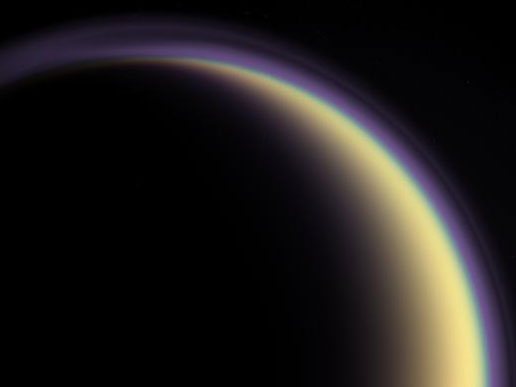
And guess where the technique was used not too long ago? Titan! That’s a moon of Saturn full of hydrocarbons and what could be a precursor chemistry to life. The moon is completely socked in with this orange haze that is intriguing. Scientists are still trying to figure out what it is made of — and also, to use our understanding of it to apply to planets outside our solar system.

When a huge exoplanet passes in front of its star, and it’s close enough to Earth, scientists are starting to learn how to ferret out information about its chemistry. This shows them what temperature the atmosphere is like and what it is made of, although it should be emphasized scientists are only starting on this work.


A composite image of Titan's atmosphere, created using blue, green and red spectral filters to create an enhanced-color view. Image Credit: NASA/JPL/Space Science Institute


A composite image of Titan’s atmosphere, created using blue, green and red spectral filters to create an enhanced-color view. Image Credit: NASA/JPL/Space Science Institute
The goal of performing these transit observations of Titan was to understand how haze on an exoplanet might blur the observations. From four passes with the Cassini spacecraft, the team (led by Tyler Robinson at NASA’s Ames Research Center) found that haze would make it difficult to get information from all but the upper atmosphere.

“An additional finding from the study is that Titan’s hazes more strongly affect shorter wavelengths, or bluer, colors of light,” NASA stated at the time. “Studies of exoplanet spectra have commonly assumed that hazes would affect all colors of light in similar ways. Studying sunsets through Titan’s hazes has revealed that this is not the case.”

The nature of Pluto will better come to light when New Horizons makes its pass by the planet in July 2015. Meanwhile, controllers are counting down the days until the spacecraft emerges from its last hibernation on Saturday (Dec. 6).

Source: Johns Hopkins Applied Physics Laboratory


About 

Elizabeth Howell is the senior writer at Universe Today. She also works for Space.com, Space Exploration Network, the NASA Lunar Science Institute, NASA Astrobiology Magazine and LiveScience, among others. Career highlights include watching three shuttle launches, and going on a two-week simulated Mars expedition in rural Utah. You can follow her on Twitter @howellspace or contact her at her website.